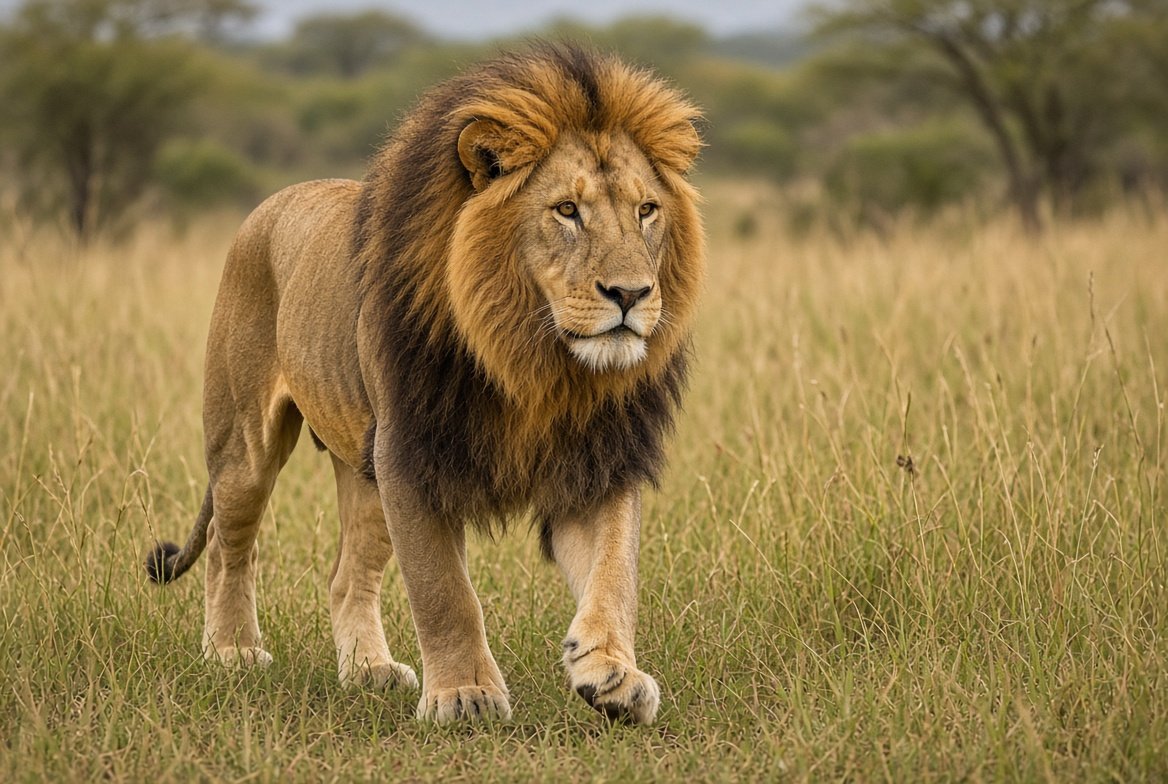
The Bengal tiger is the most numerous tiger subspecies and one of the largest big cats. Adult males can weigh 180–260 kilograms or more, with exceptional individuals larger still. Their orange coat with black stripes provides excellent camouflage in forest and grassland habitats.
They are found primarily in India, with smaller populations in Bangladesh, Nepal, and Bhutan. Preferred habitats include tropical forests, mangrove swamps (such as the Sundarbans), and grasslands with sufficient cover and prey.
Hunting and solitary life
Tigers are solitary hunters. They rely on stealth and a short burst of speed rather than long chases. Prey includes deer, wild boar, and occasionally larger animals such as gaur or young elephants. A successful hunt can sustain a tiger for several days.
Territories are marked with scent and scratch marks. Males have larger ranges that may overlap with several females.
Conservation
Bengal tigers are listed as Endangered. Poaching for skins and body parts, habitat fragmentation, and human-wildlife conflict remain serious threats. India has made significant efforts through protected areas and anti-poaching measures, and some populations have shown recovery in recent years.
Despite these gains, the overall wild tiger population remains a fraction of historical numbers. Continued protection of habitat and prey is essential for their long-term survival.