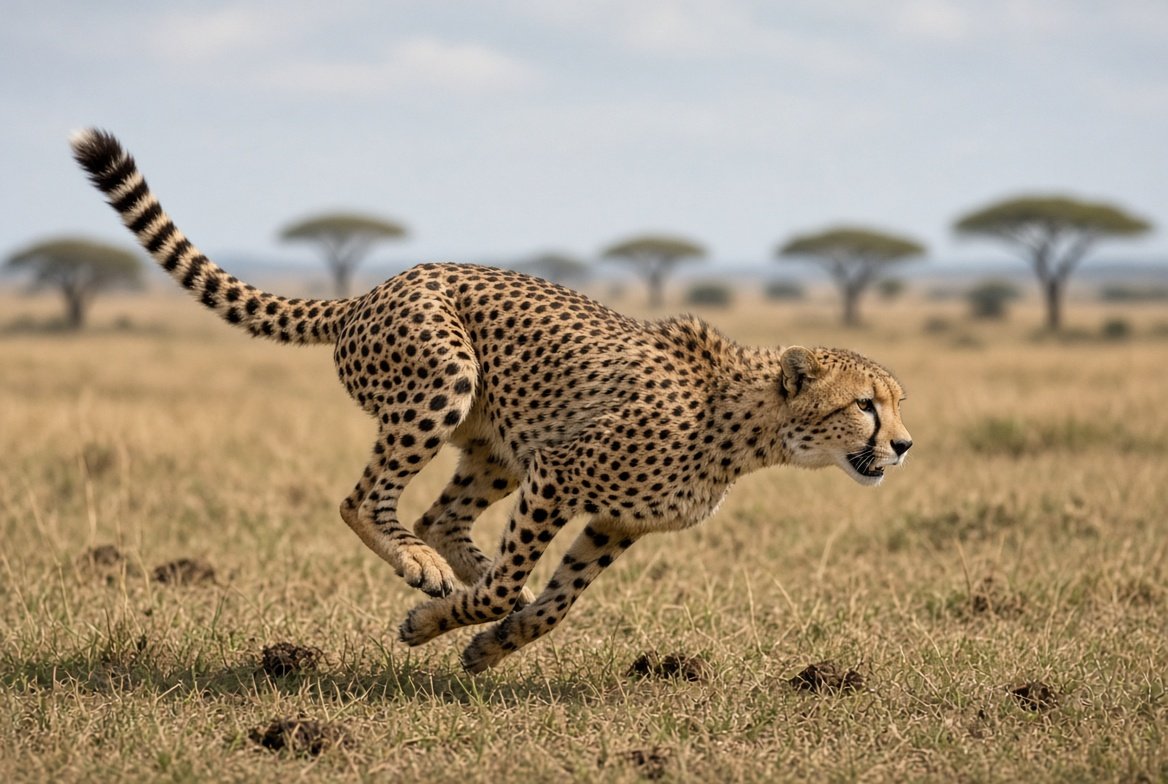
The leopard is one of the most adaptable big cats. It lives across a huge range of habitats in Africa and Asia, from rainforest and savanna to desert and high mountains, and it can even survive near human settlements.
Adults typically weigh 30 to 80 kilograms. Males are larger than females. Their spotted coats provide excellent camouflage in both dense vegetation and open woodland. The pattern of rosettes is unique to each individual.
Hunting and behavior
Leopards are solitary and mostly nocturnal. They hunt a wide variety of prey, from small rodents and birds to medium-sized antelope. A well-known behavior is dragging kills into trees to keep them away from lions, hyenas, and other scavengers. Their strength relative to body size is impressive.
They are excellent climbers and strong swimmers. Territories are marked with scent and scratches. Females raise cubs alone; the young stay with the mother for up to two years while learning to hunt.
Conservation
The leopard is listed as Vulnerable by the IUCN. Populations have declined in many parts of their historic range due to habitat loss, prey depletion, conflict with livestock farmers, and poaching. Some subspecies, particularly in Asia, are critically endangered.
Despite the pressures, leopards remain more resilient than many other big cats because of their ability to live in a variety of habitats and eat almost anything they can catch.