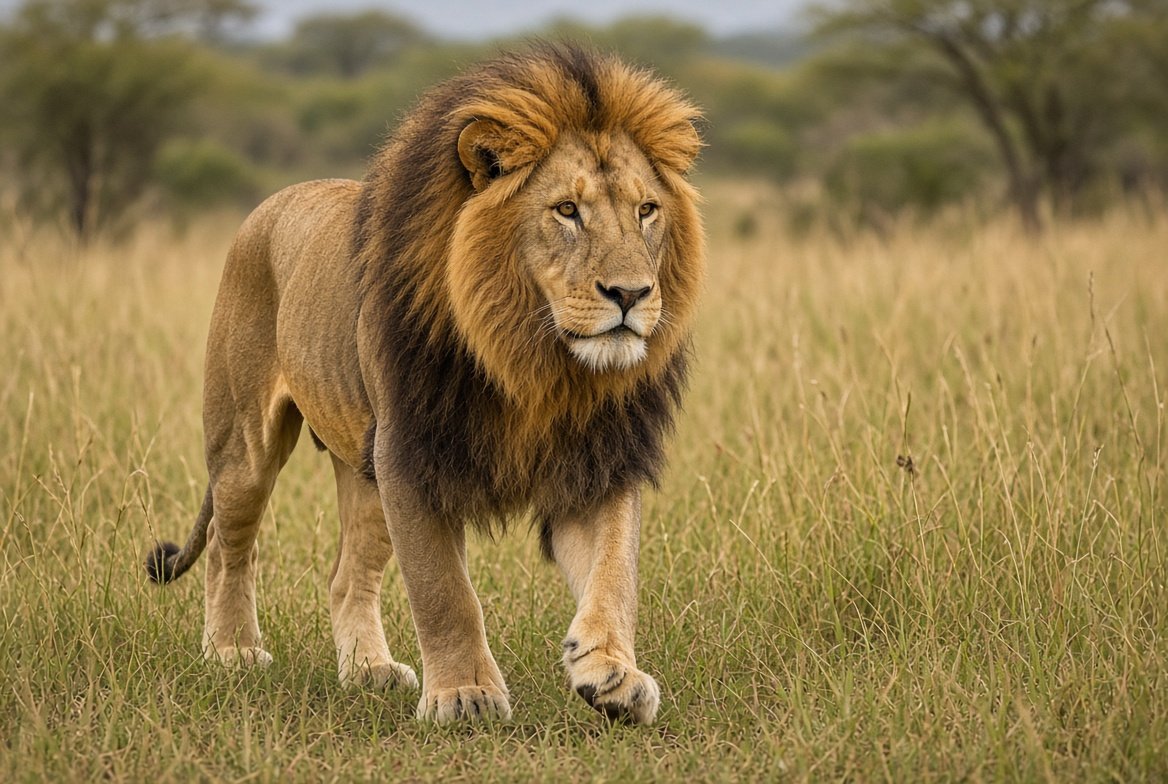
The African lion is the only truly social big cat. Prides typically consist of related females, their cubs, and one or more adult males. This social system allows cooperative hunting and defense of territory and young.
Adult males are recognizable by their manes, which vary in color and thickness. The mane may signal health and fighting ability to rivals and potential mates. Females are smaller, more agile, and do most of the hunting.
Hunting and diet
Lions hunt a wide range of prey, from warthogs and zebras to buffalo and even young elephants or giraffes in some areas. Cooperative hunts increase success rates, especially against larger animals. They are opportunistic and will scavenge when the chance arises. A pride can consume large amounts of meat in a single feeding.
Males often take the first share of a kill, followed by females and then cubs.
Range and conservation
Lions once ranged across much of Africa, the Middle East, and into parts of Europe and Asia. Today they are largely restricted to sub-Saharan Africa, with a small population of Asiatic lions in India. The species is listed as Vulnerable. Habitat loss, prey depletion, and conflict with people are the primary threats.
In well-managed protected areas, lion populations can remain stable or grow. Outside reserves, numbers continue to decline in many regions.
The roar of a lion can carry for several kilometers and serves both to communicate with pride members and to warn rivals.