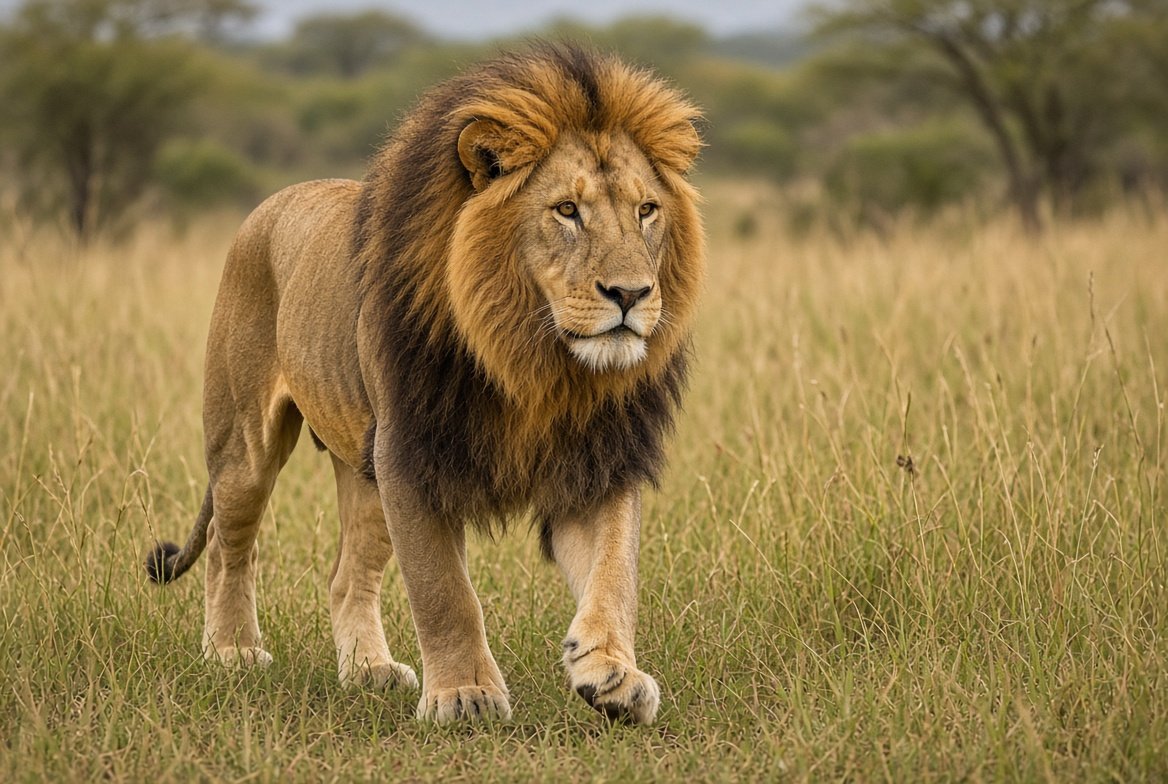
The cheetah is built for one thing: short, explosive bursts of speed. It is the fastest land animal, capable of reaching roughly 100–120 km/h in a sprint lasting only a few seconds.
Unlike most big cats, cheetahs rely on speed rather than strength or stealth from cover. Their light frame, long legs, flexible spine, and non-retractable claws that act like running spikes give them the acceleration of a sports car. Tear marks running from the inner eye to the mouth help reduce glare and may aid in focusing on prey during a chase.
Hunting and diet
Cheetahs mainly hunt small to medium antelopes such as Thomson’s gazelle, impala, and springbok. They stalk as close as possible, then launch into a full sprint. Success rates are relatively high for big cats, but the chase is energetically expensive, and they often lose kills to lions, hyenas, or leopards.
They are mostly diurnal, which helps them avoid competition with larger nocturnal predators.
Social structure and range
Females are usually solitary except when raising cubs. Males sometimes form coalitions of two or three, often brothers, which helps them hold territory. Cheetahs live in open grasslands and savannas across parts of Africa, with a small remaining population in Iran.
Conservation
The species is listed as Vulnerable. Habitat loss, conflict with livestock farmers, and low genetic diversity are the main pressures. Captive breeding and reintroduction efforts exist, but wild populations continue to face challenges.
Watching a cheetah at full speed is one of the most dramatic sights in the animal kingdom—brief, precise, and almost mechanical in its efficiency.