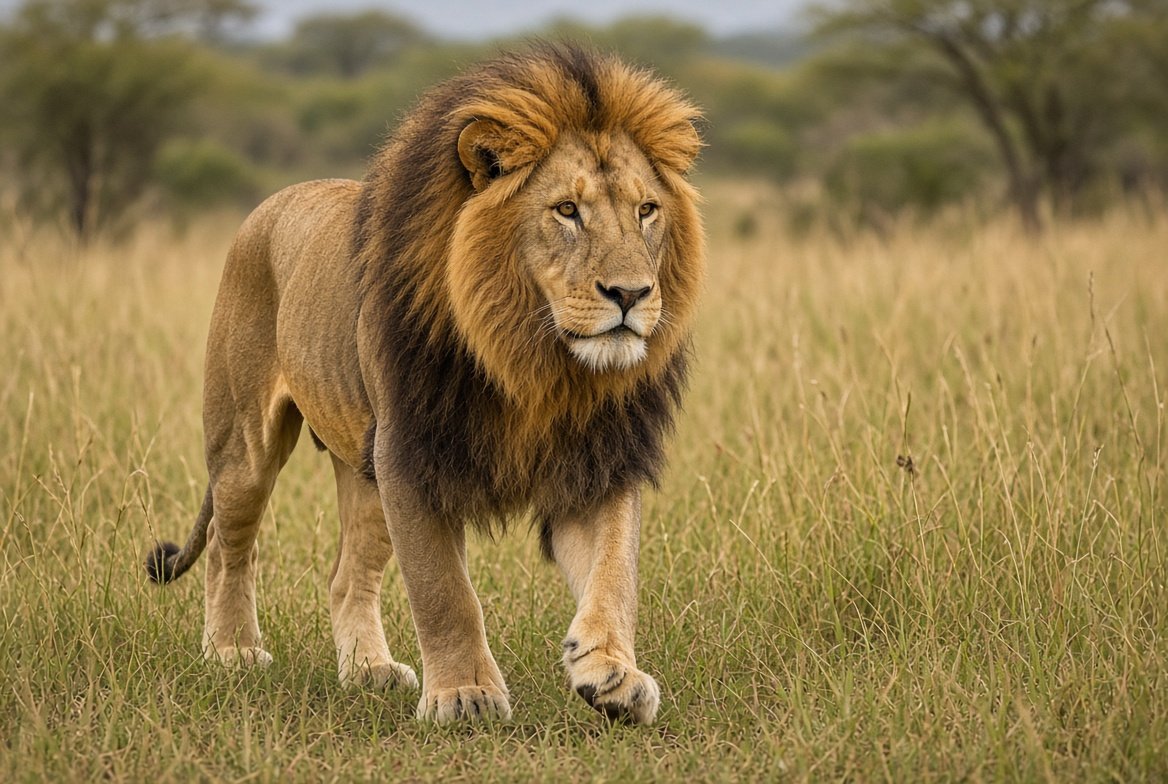
Brown bears are among the largest land carnivores. They live across parts of North America, Europe, and Asia and are known for their strength, intelligence, and varied diet.
Adult males can weigh 200 to 600 kilograms depending on the population and food availability. Coastal bears that feed on salmon often grow larger than inland bears. Their shoulder hump is formed by massive muscles used for digging and breaking open logs.
Diet and behavior
Brown bears are omnivores. They eat berries, roots, insects, fish, and large mammals when they can catch them. In coastal areas they gather at rivers during salmon runs. They dig for roots and grubs and will raid caches or scavenged carcasses. They are mostly solitary except for mothers with cubs and temporary gatherings at abundant food sources.
They dig dens for winter hibernation in colder parts of their range. During hibernation their heart rate and body temperature drop, and they do not eat, drink, or defecate for months.
Range and conservation
Populations are stable or increasing in many protected areas, though habitat fragmentation and conflict with humans remain issues in some regions. The species as a whole is listed as Least Concern, but some subspecies and local populations are threatened.
Seeing a brown bear in the wild requires caution and distance. They are powerful animals that can run faster than most people expect over short distances.