When measuring the strongest bite force in the animal kingdom, scientists use PSI (Pounds per Square Inch) or Newtons. However, compiling an accurate list requires a crucial scientific distinction: some bite forces are actively measured in a lab using force transducers (in vivo), while others are estimated using 3D computer modeling because the animals are too dangerous or elusive to test alive.
Based on live, measured data, the animal with the strongest bite force in the world is the Saltwater Crocodile, with a staggering 3,700 PSI. For context, the average human bite force is roughly 160 PSI.
Below is the definitive ranking of the top 10 strongest bite forces on Earth, separating the measured champions from the computer-modeled giants.

The Top 10 Strongest Animal Bites
1. Saltwater Crocodile (Crocodylus porosus) – 3,700 PSI
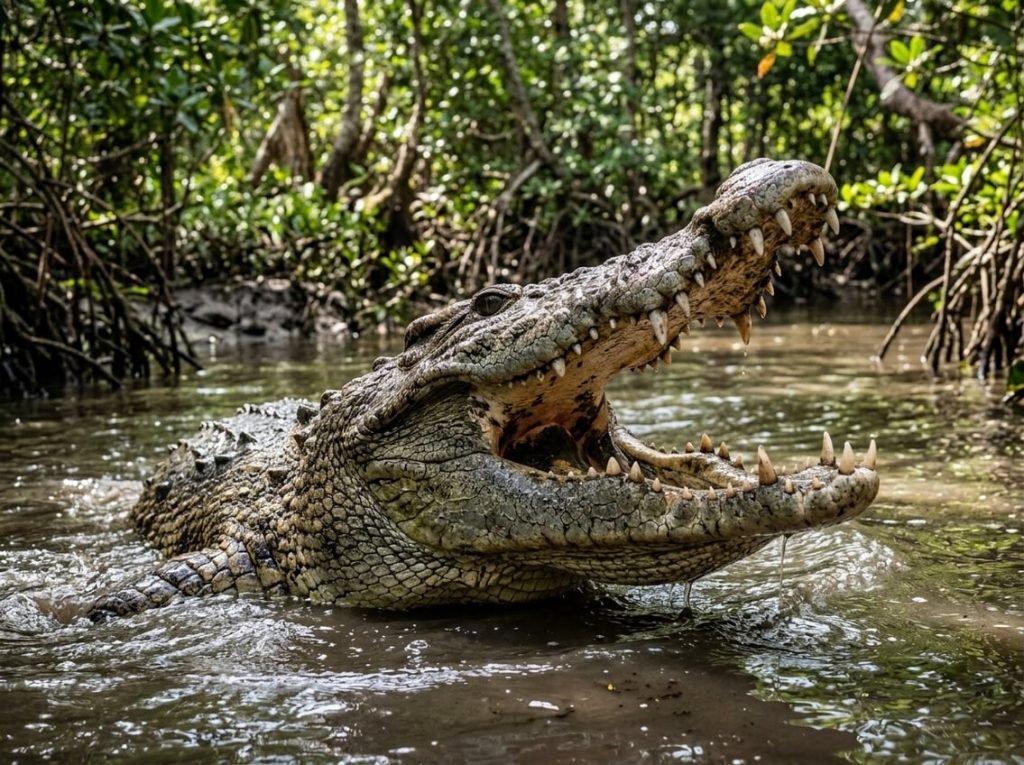
The Saltwater Crocodile holds the scientifically verified record for the most powerful bite of any living animal. In a landmark 2012 study led by paleobiologist Dr. Gregory Erickson, a 17-foot saltwater crocodile clamped down on a force transducer with 3,700 PSI (16,414 Newtons). Interestingly, while the muscles that close a crocodile’s jaw are incredibly dense, the muscles used to open it are so weak that a human can hold their snout shut with bare hands.
2. Great White Shark (Carcharodon carcharias) – 4,000 PSI (Estimated)
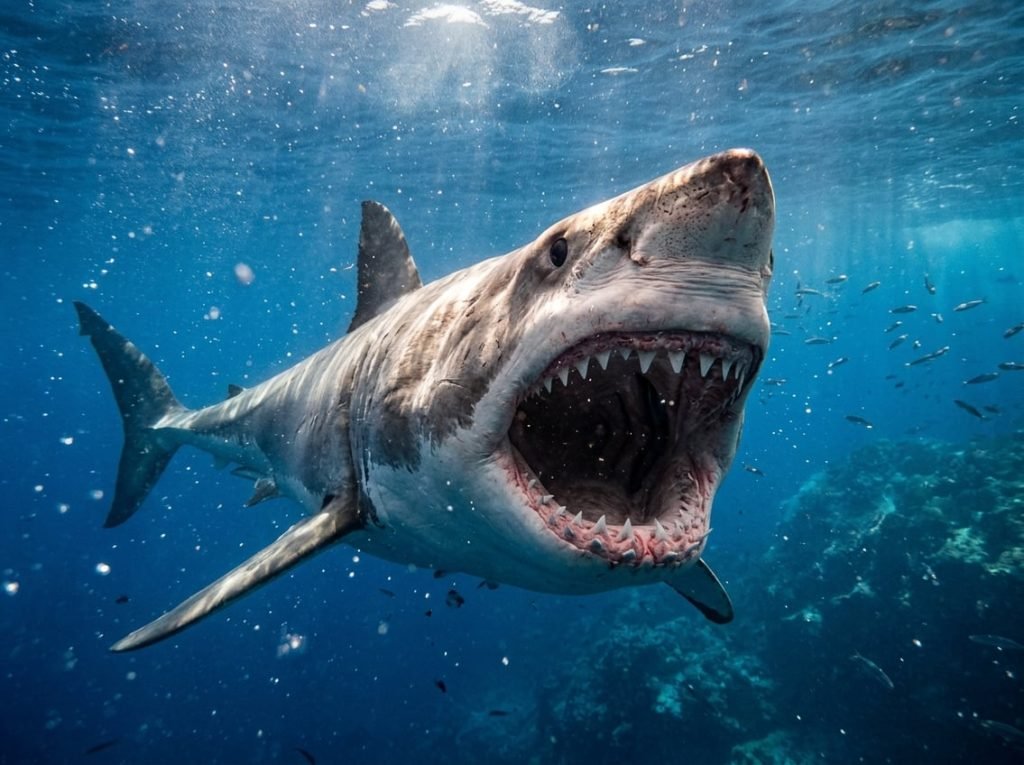
The Great White Shark is widely cited as having a 4,000 PSI bite, but this number has never been measured on a live specimen. Instead, a 2008 study by Dr. Stephen Wroe used digital biomechanical models of a 21-foot Great White’s skull to estimate its maximum bite force. Because sharks rely on razor-sharp, serrated teeth to slice through flesh rather than crush bone, they don’t actually need as much raw crushing power as a crocodile.
3. Hippopotamus (Hippopotamus amphibius) – 1,800 PSI
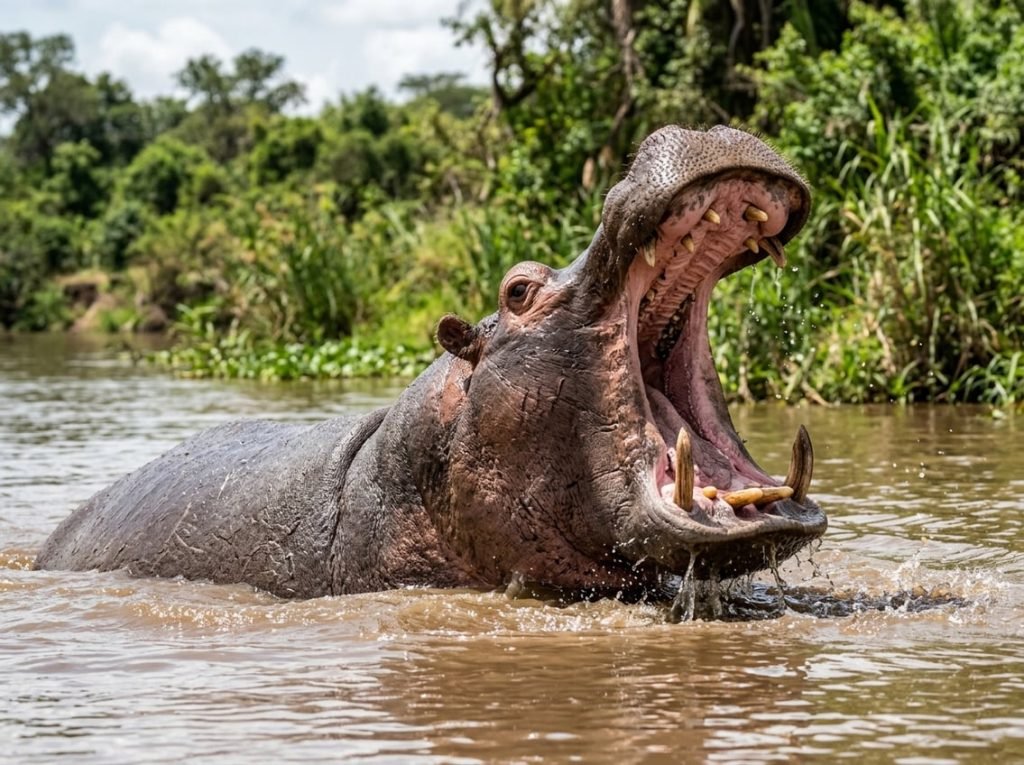
The hippopotamus possesses the strongest bite of any terrestrial mammal. Notably, this 1,800 PSI measurement was taken from a female hippo; males are considered too aggressive to safely test. Hippos are herbivores, but their massive jaws and foot-long canine tusks are used for territorial combat and defending against crocodiles, not for chewing food.
4. Jaguar (Panthera onca) – 1,500 PSI
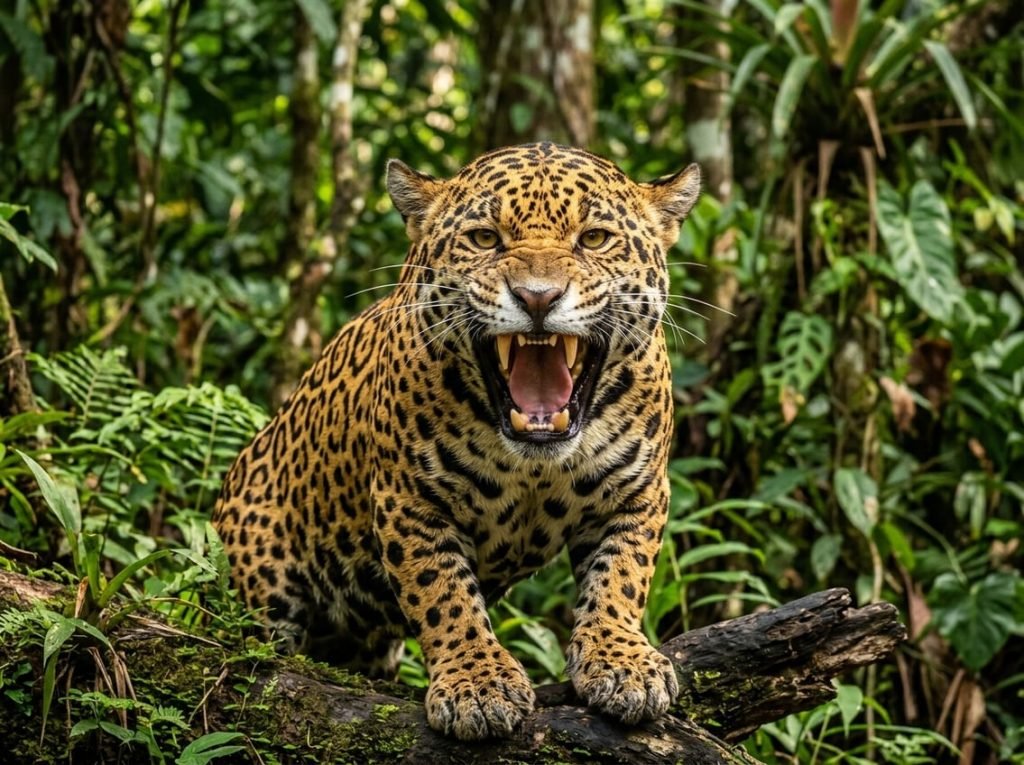
The Jaguar has the strongest bite force of any big cat, far surpassing the lion and tiger. While most big cats hunt by biting the throat to suffocate their prey, the jaguar’s skull and jaw muscles evolved to pierce directly through the temporal bones of a skull or crush the thick shells of freshwater turtles and caimans.
5. Gorilla (Gorilla beringei / Gorilla gorilla) – 1,300 PSI
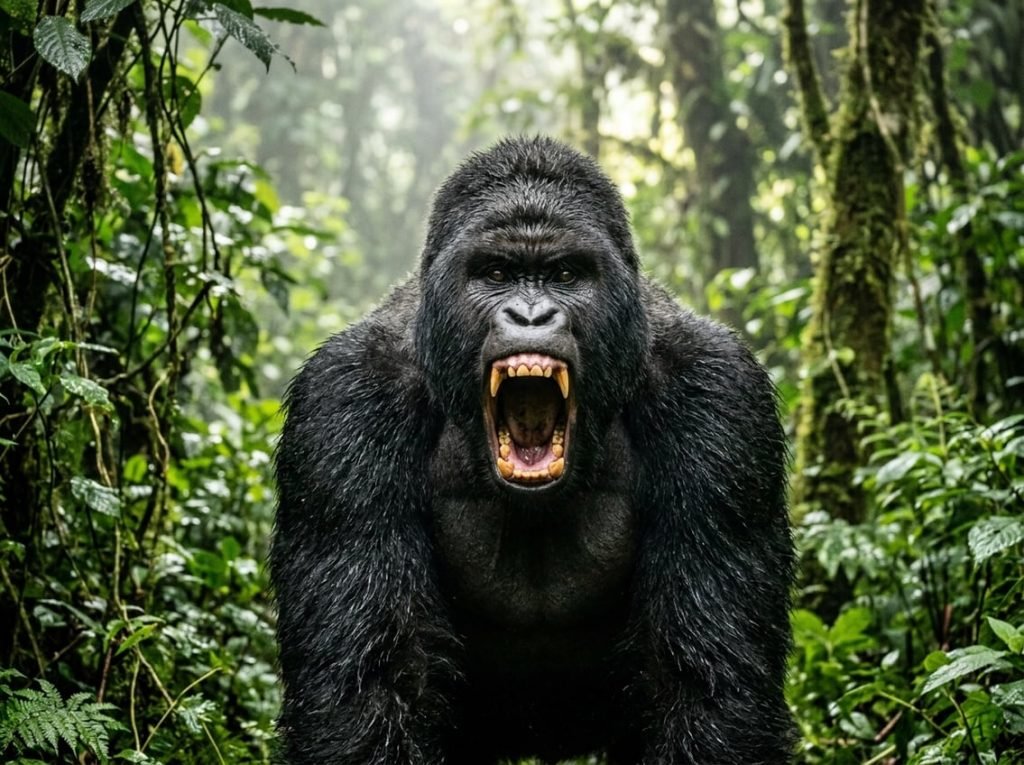
Despite being predominantly gentle herbivores, gorillas possess an immense bite force of 1,300 PSI. Their skulls feature a prominent sagittal crest (the ridge of bone on top of the head) which anchors massive temporalis muscles. This jaw strength is an evolutionary adaptation for grinding down tough, fibrous vegetation like bamboo, bark, and roots.
6. Polar Bear (Ursus maritimus) – 1,200 PSI
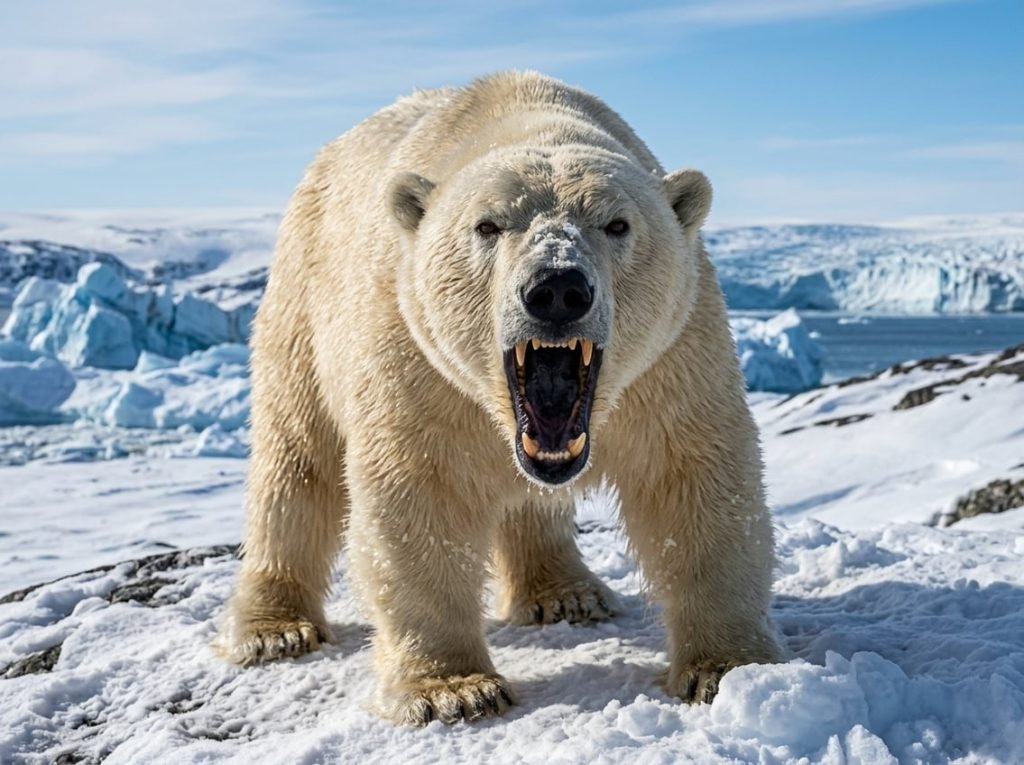
Unlike other bears that rely heavily on foraging, the Polar Bear is a hypercarnivore. Its 1,200 PSI bite is an evolutionary necessity to survive in the Arctic, allowing it to crush the thick skulls of ringed seals and bite through heavy layers of blubber and ice.
7. Spotted Hyena (Crocuta crocuta) – 1,100 PSI
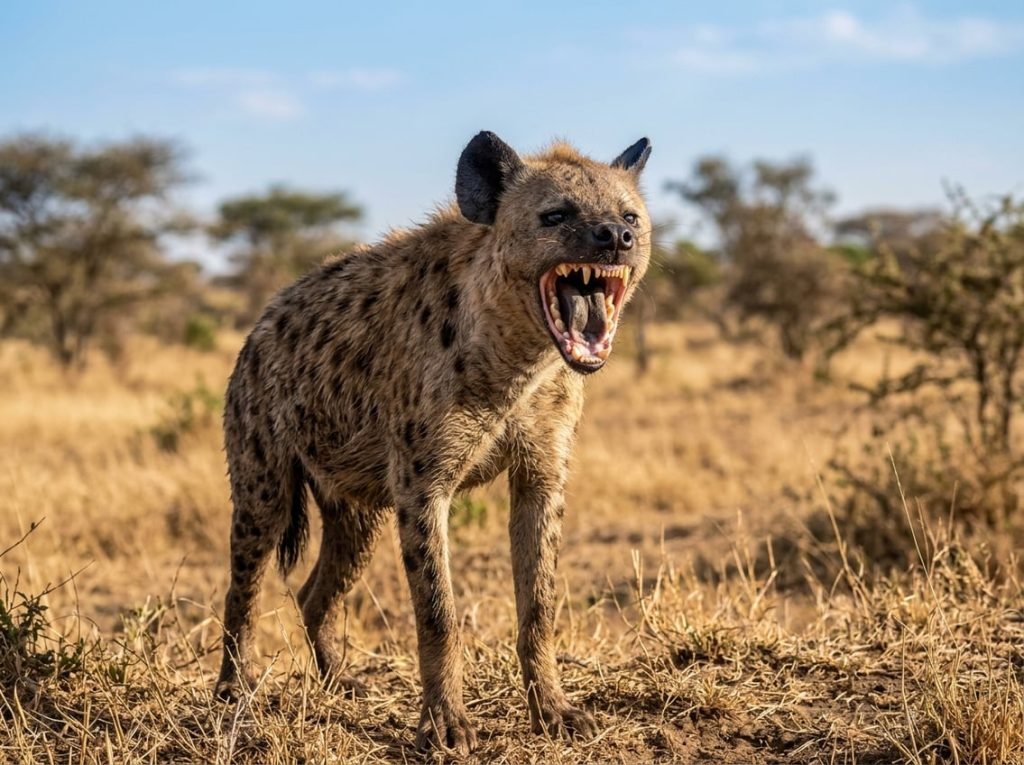
As detailed in our complete guide to the Types of Hyenas, the Spotted Hyena is a “bone-crushing” predator. Their specialized, conical premolars and vaulted skulls allow them to shatter elephant and giraffe bones to access the highly nutritious marrow inside, leaving almost no trace of a carcass behind.
8. Bengal Tiger (Panthera tigris tigris) – 1,050 PSI
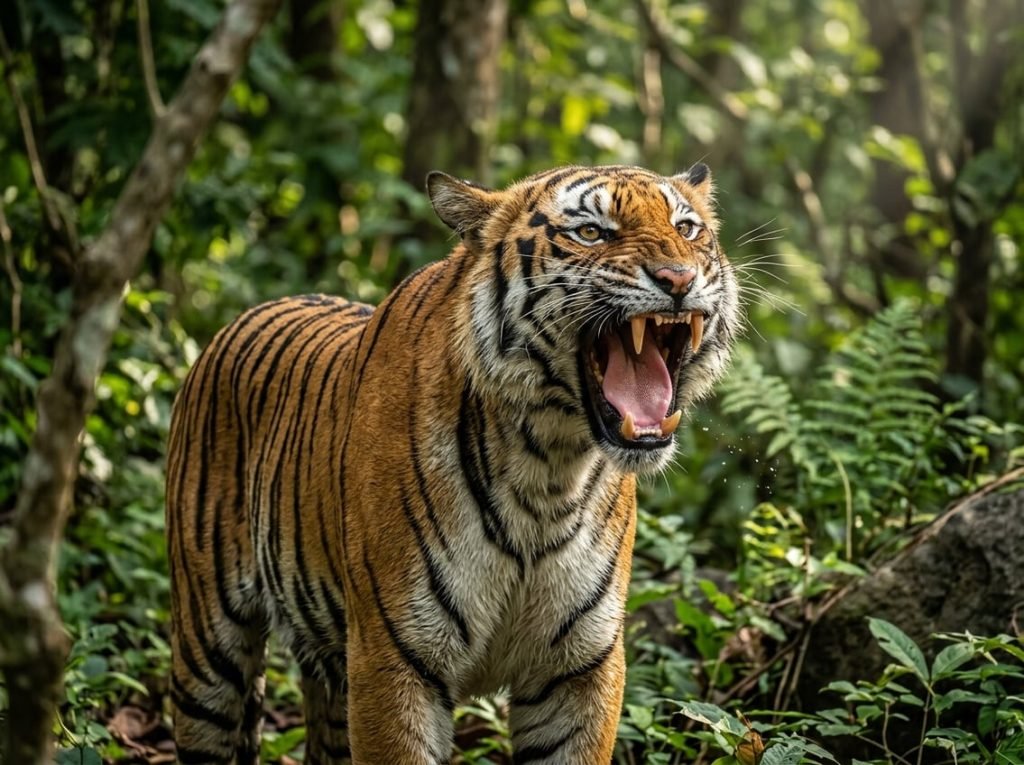
The Bengal Tiger boasts the longest canine teeth of any living feline (up to 3 inches). Their 1,050 PSI bite force allows them to instantly sever the spinal cord of large prey like water buffalo and sambar deer.
9. Grizzly Bear (Ursus arctos horribilis) – 975 PSI
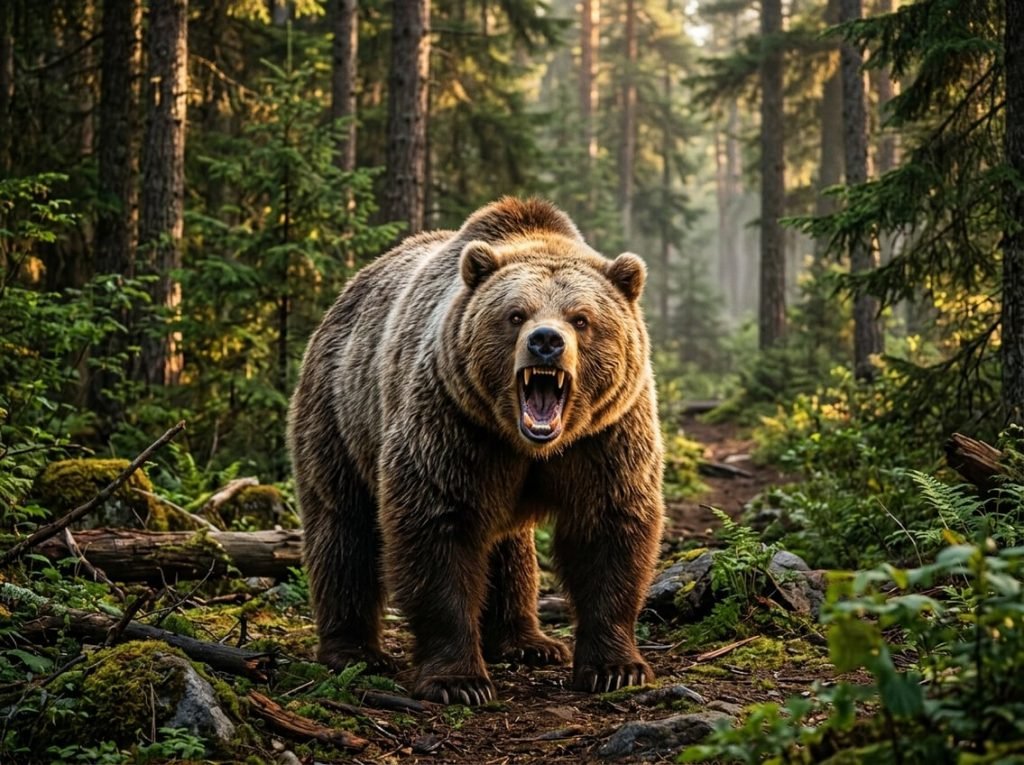
The Grizzly Bear’s bite force approaches 1,000 PSI, which is strong enough to crush a cast-iron skillet or a bowling ball. They use this immense power to crack open elk bones, defend territory, and tear apart rotting logs to find insects.
10. Lion (Panthera leo) – 650 PSI

Surprisingly, the “King of the Jungle” has a relatively weak bite force for its size. Because lions are social pack hunters that kill by clamping down on a prey’s windpipe to induce suffocation, they do not require the solitary, bone-crushing jaw strength of a jaguar or tiger.
The Pound-for-Pound Champions (Bite Force Quotient)
Raw PSI only tells half the story. Biologists use the Bite Force Quotient (BFQ) to measure an animal’s bite strength relative to its body weight. When looking at BFQ, the largest animals lose their crowns to highly specialized smaller predators.
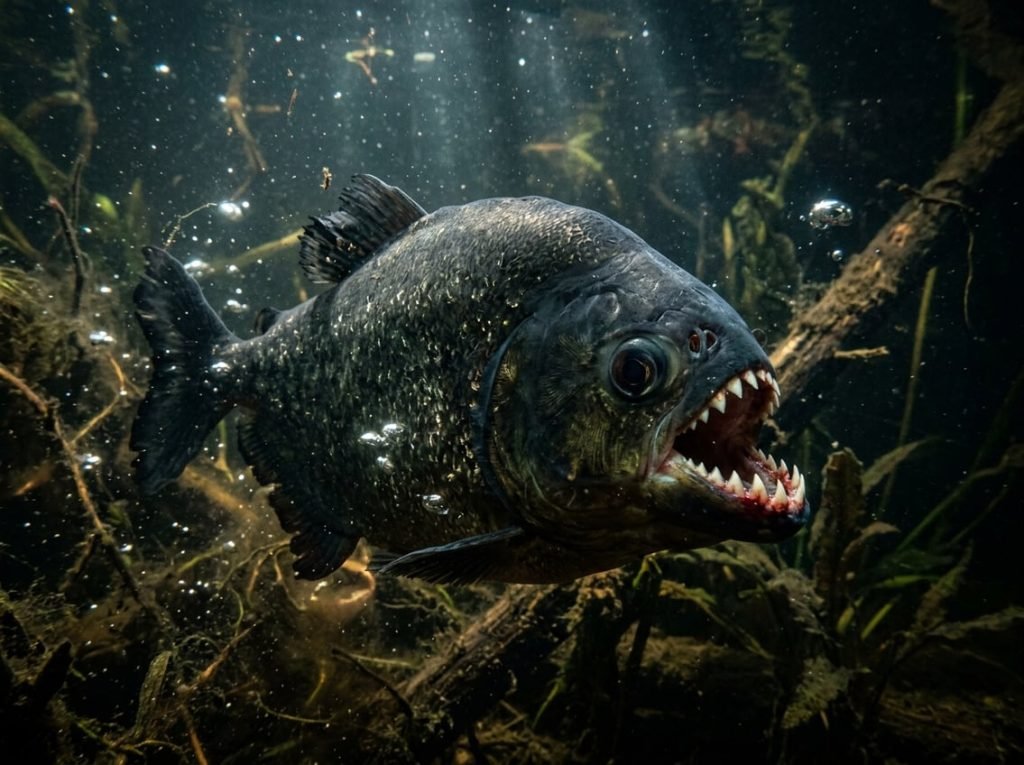
- Black Piranha (BFQ 320): The Black Piranha has the strongest bite force relative to its body size of any living vertebrate. Its bite is equivalent to 30 times its own body weight.
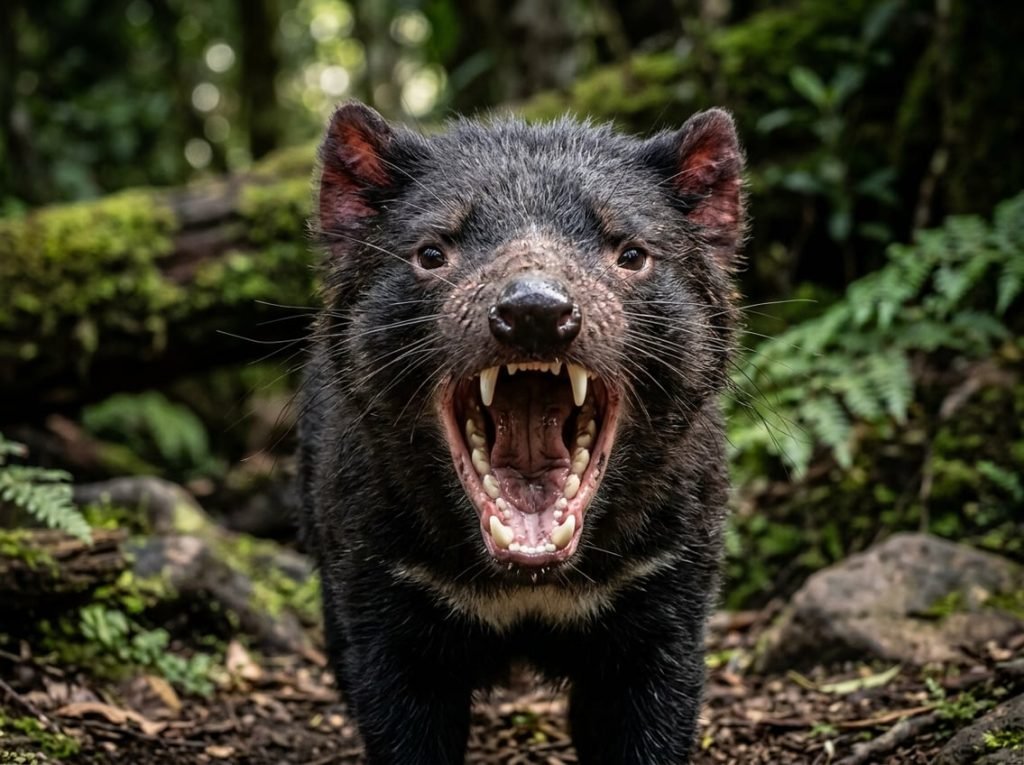
- Tasmanian Devil (BFQ 181): This carnivorous marsupial has a jaw that opens to an 80-degree angle, allowing it to crush through the bones of animals much larger than itself.
Myth Busting: Does the Snapping Turtle Have a Strong Bite?
A widespread urban legend claims that the Alligator Snapping Turtle has a bite force of 1,000 PSI, making it one of the strongest biters in the animal kingdom and easily capable of snapping a broomstick in half.
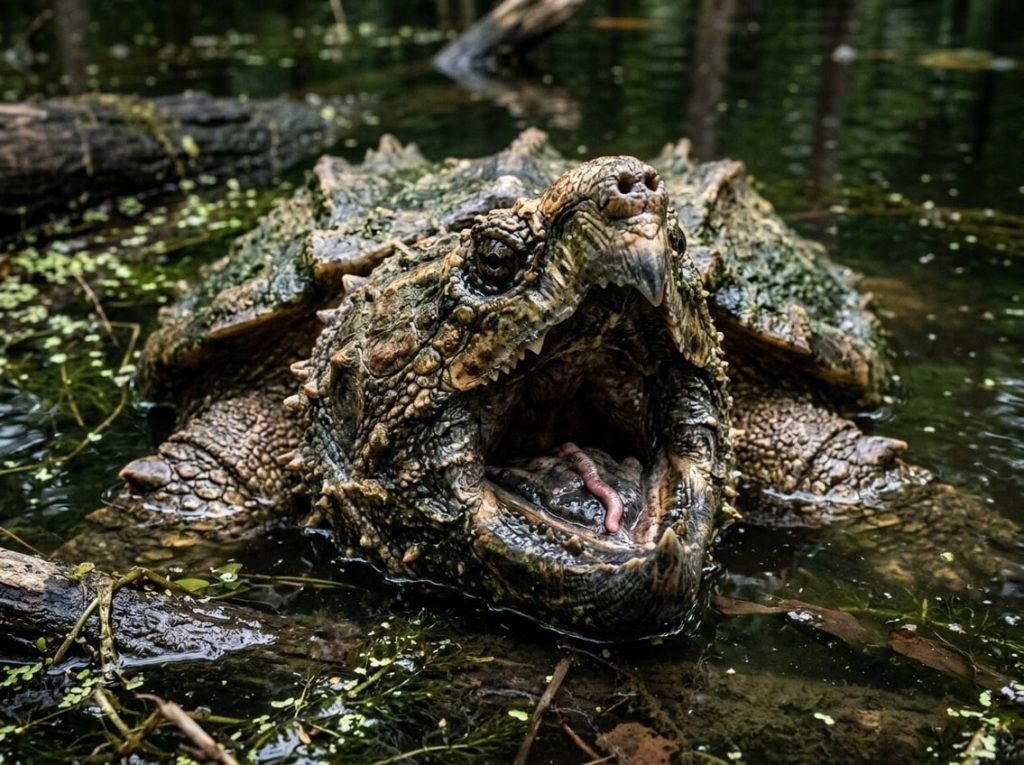
Scientifically, this is entirely false.
According to studies measuring jaw strength, the Common Snapping Turtle only registers a bite force of about 147 to 210 Newtons (roughly 33 to 47 PSI). The larger Alligator Snapping Turtle is slightly stronger but still falls far short of the myths.
Surprisingly, the average human (160 PSI) actually has a stronger bite force than a snapping turtle.
So why do they cause such severe injuries? It isn’t raw crushing power (PSI). Instead, snapping turtles inflict damage because their beaks are incredibly sharp, acting like a pair of shearing scissors rather than a blunt crushing vice.
Which Dog Has the Strongest Bite Force?
A common myth is that Pitbulls have “locking jaws” and the highest bite force of any domestic dog. Scientifically, a Pitbull’s bite force is only average for its size (roughly 235 PSI), and no dog has a locking jaw mechanism.
The domestic dog with the strongest scientifically recorded bite force is the Kangal, a massive Turkish livestock guardian breed, which registers at 743 PSI. They are followed closely by the Cane Corso (700 PSI) and the English Mastiff (556 PSI).
Quick Reference: Top 10 Bite Forces
[Webmaster Note: Keep this as a clean HTML table to capture AI Overviews for “animal bite force list” queries.]
| Rank | Animal | Scientific Name | Bite Force (PSI) | Diet Classification |
|---|---|---|---|---|
| 1 | Saltwater Crocodile | Crocodylus porosus | 3,700 | Carnivore |
| 2 | Great White Shark | Carcharodon carcharias | 4,000 (Estimated) | Carnivore |
| 3 | Hippopotamus | Hippopotamus amphibius | 1,800 | Herbivore |
| 4 | Jaguar | Panthera onca | 1,500 | Carnivore |
| 5 | Gorilla | Gorilla spp. | 1,300 | Herbivore |
| 6 | Polar Bear | Ursus maritimus | 1,200 | Carnivore |
| 7 | Spotted Hyena | Crocuta crocuta | 1,100 | Carnivore |
| 8 | Bengal Tiger | Panthera tigris tigris | 1,050 | Carnivore |
| 9 | Grizzly Bear | Ursus arctos horribilis | 975 | Omnivore |
| 10 | Lion | Panthera leo | 650 | Carnivore |
Frequently Asked Questions (FAQ)
The Saltwater Crocodile has the strongest scientifically measured bite force of any living animal, recorded at 3,700 PSI. While Great White Sharks are estimated to have a higher bite force (around 4,000 PSI), this number is based on computer modeling, not live testing.
The average adult human has a bite force of between 120 and 160 PSI. This is roughly ten times weaker than a jaguar and over twenty times weaker than a saltwater crocodile.
Yes. The Spotted Hyena has a bite force of 1,100 PSI, which is significantly stronger than the 650 PSI bite force of an average lion. Hyenas evolved this strength to crush and consume solid bone, whereas lions kill primarily by suffocating their prey.