
The gopher tortoise (Gopherus polyphemus) is a large, terrestrial reptile native to the southeastern United States. Renowned for their incredible digging abilities, they are considered a “keystone species” because the extensive, deep burrows they dig provide critical shelter for more than 350 other animal species. Without the gopher tortoise, the entire ecosystem of the southeastern pine forests would collapse.
Quick Facts: Gopher Tortoise Profile
| Category | Information |
|---|---|
| Scientific Name | Gopherus polyphemus |
| Common Name | Gopher tortoise |
| Kingdom / Phylum | Animalia / Chordata |
| Class / Order | Reptilia / Testudines |
| Family / Genus | Testudinidae / Gopherus |
| Diet Type | Herbivore |
| Average Lifespan | 40 to 60 years (up to 80+ in captivity) |
| Conservation Status | Vulnerable (Federally Threatened in parts of its range) |
Physical Characteristics and Size
The gopher tortoise is built entirely for digging and moving through loose, sandy soil.
- Size & Length: Adult gopher tortoises typically measure between 9 to 15 inches (23 to 38 cm) in length.
- Weight: They are heavy and robust, weighing between 8 to 15 pounds (3.6 to 6.8 kg) when fully grown.
- Shell (Carapace): Their upper shell is domed and ranges in color from dark brown to grayish-black, while the underside (plastron) is a dull yellowish color. The scutes (scales) on their shell are relatively smooth compared to other tortoises.
- Legs & Claws: Their most distinct physical adaptation is their front legs. They are flat, heavily scaled, and muscular, acting like natural shovels equipped with thick claws designed for excavating deep tunnels. Their hind legs are stout and cylindrical, resembling miniature elephant legs, to provide leverage while digging.
Geographic Range and Habitat
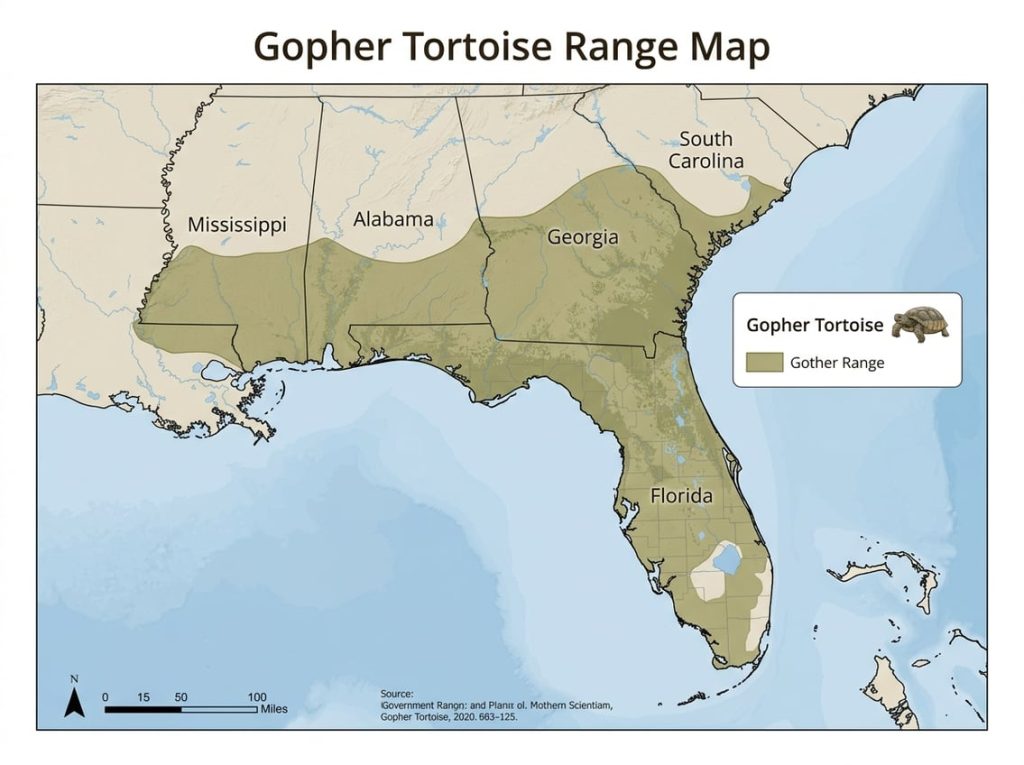
The gopher tortoise is the only land tortoise native to the southeastern United States. Their range includes parts of Louisiana, Mississippi, Alabama, Georgia, and South Carolina, though the vast majority of the population lives in Florida.
Preferred Habitats: They require well-drained, sandy soils for digging and an open tree canopy that allows sunlight to reach the forest floor for basking and growing the plants they eat. They are most commonly found in:
- Longleaf pine sandhills
- Scrub forests and dry oak hammocks
- Coastal dunes and dry prairies
The Burrowing Ecosystem: A single gopher tortoise will dig several burrows throughout its territory. These burrows can be up to 10 feet deep and 40 feet long. They maintain a constant year-round temperature and humidity, providing a vital refuge from summer heat, winter freezes, and wildfires for hundreds of other species, including indigo snakes, burrowing owls, and gopher frogs.
Diet and Foraging Behavior
The gopher tortoise is a strict herbivore that spends the warmest parts of the day foraging for food near the entrance of its burrow.
What they eat:
- Primary Diet: Broadleaf grasses, wiregrass, and low-growing weeds.
- Secondary Diet: They frequently eat blackberries, blueberries, prickly pear cactus pads, and their absolute favorite: the “gopher apple” (a low-growing fruit native to their habitat).
Water Consumption: Like the kit fox, gopher tortoises rarely drink standing water. They get almost all the hydration they need directly from the moisture-rich plants and morning dew they consume.
Reproduction and Life Cycle
Gopher tortoises are incredibly slow to mature, which makes it difficult for their populations to recover from habitat loss. Females do not reach sexual maturity until they are 10 to 20 years old.
Mating occurs between April and June. The female lays a small clutch of 5 to 9 ping-pong-ball-sized eggs, usually burying them directly in the sandy apron of dirt at the entrance of her burrow where the sun can incubate them.
Temperature-Dependent Sex Determination: The sex of the hatchlings is determined by the temperature of the sand during incubation. Warmer sand produces females, while cooler sand produces males. The eggs hatch after 80 to 110 days. The hatchlings are only 2 inches long and are highly vulnerable to predators like raccoons, armadillos, and fire ants; less than 6% of baby tortoises survive their first year.
Frequently Asked Questions (FAQ)
A gopher tortoise is a strict herbivore. They primarily eat low-growing broadleaf grasses, wiregrass, and weeds. They also forage for seasonal fruits like blackberries, prickly pear cactus pads, and gopher apples. They get almost all of their water from the plants they consume.
The gopher tortoise habitat is restricted to the southeastern United States, primarily in Florida, Georgia, and Alabama. They require well-drained, sandy soils for digging their deep burrows and open-canopy forests, such as longleaf pine sandhills and scrub forests, where plenty of sunlight reaches the ground.
Adult gopher tortoises measure between 9 to 15 inches (23 to 38 cm) in shell length and weigh between 8 to 15 pounds (3.6 to 6.8 kg). They have heavily scaled, shovel-like front legs that they use to excavate dirt.
The gopher tortoise is a keystone species because the massive underground burrows they dig (which can be 40 feet long) provide vital shelter for over 350 other animal species. Animals like indigo snakes, burrowing owls, and frogs rely on these burrows to survive extreme temperatures, wildfires, and predators.