
The tilefish (specifically the Golden Tilefish, Lopholatilus chamaeleonticeps) is a colorful, deep-water marine fish found along the eastern coast of the Americas. Highly prized in the culinary world for its sweet, lobster-like flavor, the tilefish is biologically fascinating because of its bizarre habitat modifications. Often referred to as the “clowns of the sea” due to their vibrant colors, they are one of the very few fish species that excavate and live inside massive underground burrows on the ocean floor.
Quick Facts: Tilefish Profile
| Category | Information |
|---|---|
| Scientific Name | Lopholatilus chamaeleonticeps (Golden Tilefish) |
| Common Name | Tilefish, golden tilefish, clown of the sea |
| Kingdom / Phylum | Animalia / Chordata |
| Class / Order | Actinopterygii (Ray-finned fishes) / Perciformes |
| Family / Genus | Malacanthidae / Lopholatilus |
| Diet Type | Carnivore (Benthic Forager) |
| Average Lifespan | Up to 40 to 50 years |
| Conservation Status | Least Concern (Heavily managed fishery) |
Physical Characteristics and Size
Tilefish are incredibly colorful and have a distinct, prehistoric-looking profile adapted for life in the dark depths of the ocean.
- Size & Length: Adult golden tilefish are large, typically measuring between 24 to 36 inches (60 to 90 cm) in length, though some can grow over 4 feet long.
- Weight: They generally weigh between 10 to 25 pounds (4.5 to 11 kg), with record catches exceeding 50 pounds.
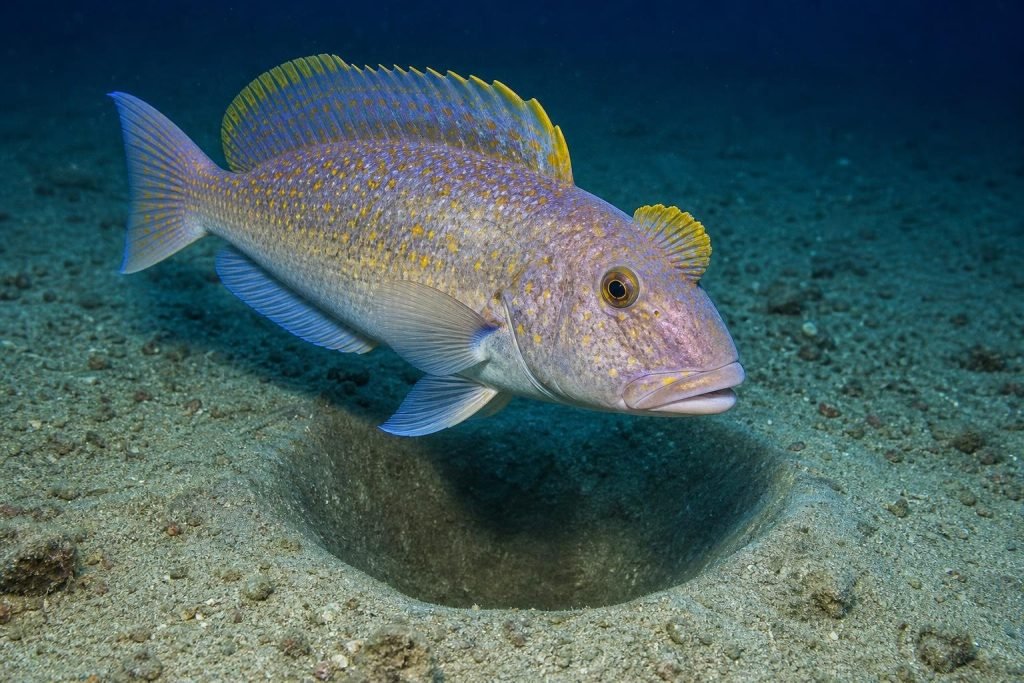
- Coloration: Their bodies are an iridescent bluish-green, covered in bright yellow and gold spots. Their underbelly is a pale white or rosy pink.
- The Adipose Flap: The most distinguishing feature of the golden tilefish is a prominent, fleshy crest (called an adipose flap) located on the top of their head, just in front of their dorsal fin.
Geographic Range and Habitat
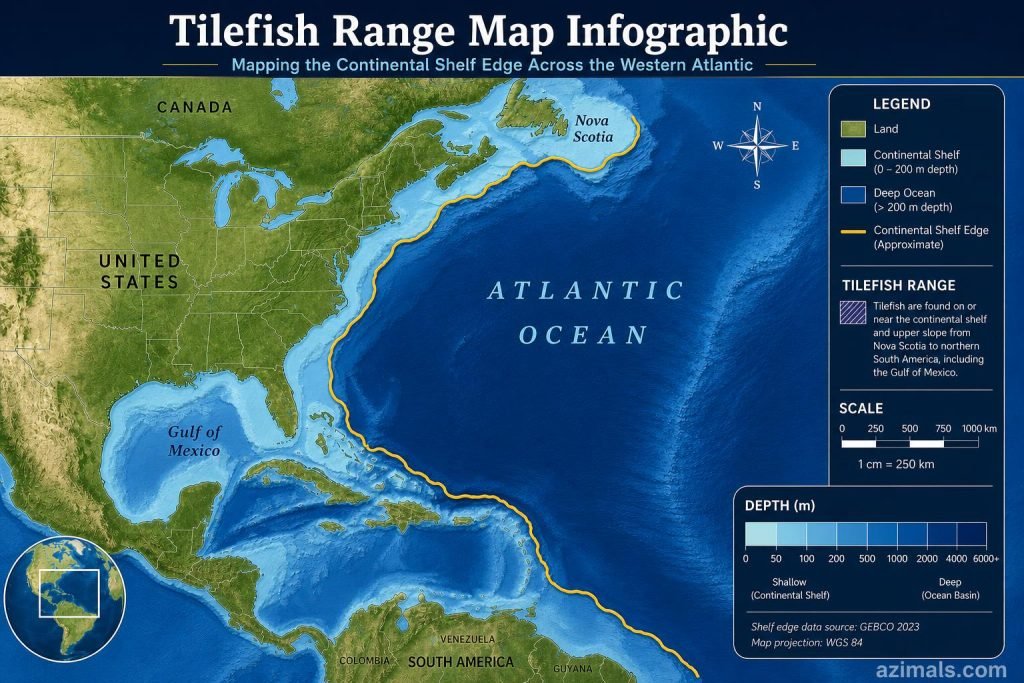
Golden tilefish are found exclusively in the western Atlantic Ocean. Their range stretches from Nova Scotia, Canada, all the way down the United States coast, into the Gulf of Mexico, and down to northern South America.
Preferred Habitats: Tilefish are deep-water bottom-dwellers (benthic fish). They live in a very specific, narrow environment:
- Depths ranging from 250 to 1,500 feet (75 to 450 meters)
- The steep drop-offs of the continental shelf and submarine canyons
- Ocean floors made of dense, malleable “Pueblo clay”
The “Prairie Dogs” of the Sea: Unlike most fish that hide in coral or swim in schools, tilefish dig massive, funnel-shaped burrows into the clay ocean floor. These burrows can be up to 10 feet deep and 15 feet wide. They use these craters to escape predators (like sharks and large groupers) and will dive head-first into their holes at the first sign of danger.
Diet and Foraging Behavior
The tilefish is a carnivorous bottom-feeder. Because they live in the dark, cold depths of the continental shelf, they rely heavily on ambush tactics, darting out of their burrows to snatch passing prey.
What they eat:
- Primary Diet: Crustaceans, specifically deep-water crabs, shrimp, and squat lobsters.
- Secondary Diet: Sea urchins, clams, snails, marine worms, and occasionally smaller fish or squid.
Culinary Impact: Because the tilefish’s diet consists almost entirely of crustaceans, their meat takes on a remarkably sweet, firm, and flaky profile that closely mimics the taste of lobster or crab. This makes them a highly sought-after commercial fish.
Reproduction and Life Cycle
Tilefish are slow-growing and long-lived, with some individuals surviving up to 50 years in the wild. Females reach sexual maturity at around 5 to 7 years of age.
They reproduce via broadcast spawning. During the breeding season (typically from March to November, peaking in the summer), females release millions of microscopic eggs into the open water column, which are simultaneously fertilized by the males. The fertilized eggs are buoyant and float up to the warmer, sunlit surface waters.
After hatching, the larval tilefish drift with the ocean currents for several months. As they mature and grow heavier, they eventually sink hundreds of feet down to the ocean floor, where they will dig their first burrow and remain for the rest of their lives.
Frequently Asked Questions (FAQ)
A tilefish is a carnivorous bottom-feeder that primarily eats deep-water crustaceans like crabs, shrimp, and squat lobsters. They also feed on sea urchins, marine worms, clams, and small fish. This heavy crustacean diet is what gives tilefish meat its famous sweet, lobster-like flavor.
Tilefish live in the deep ocean, typically at depths between 250 and 1,500 feet along the edge of the continental shelf and submarine canyons in the western Atlantic Ocean. They require ocean floors made of dense clay so they can dig their massive, funnel-shaped burrows.
Adult golden tilefish are large, heavy fish. They typically measure between 24 to 36 inches (60 to 90 cm) in length and weigh between 10 to 25 pounds, though exceptionally large individuals can reach over 4 feet long and weigh more than 50 pounds.
Tilefish are one of the only fish species that excavate burrows in the ocean floor clay. They dig these massive, cone-shaped craters to use as permanent homes and as a safe refuge to hide from deep-water predators like sharks and groupers.