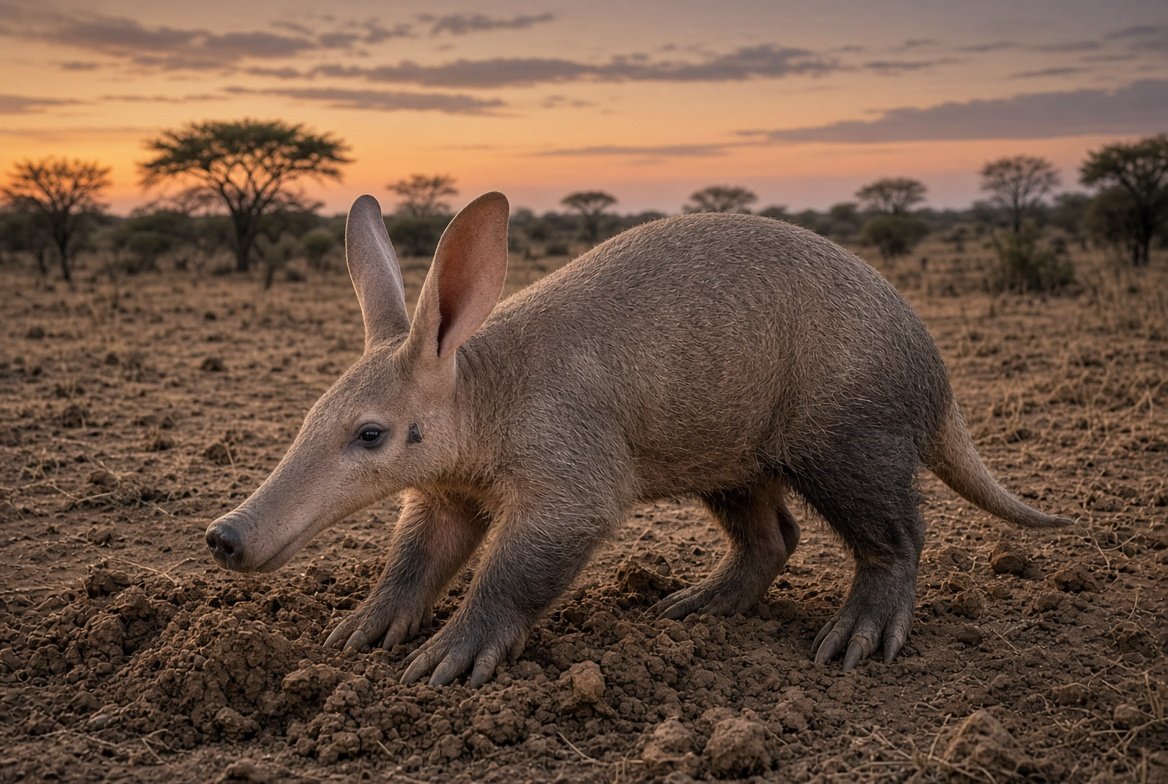
The giraffe is the tallest living terrestrial animal. Adult males can reach 5.5 to 6 meters in height, with females slightly shorter. Their extreme height is supported by long legs, an elongated neck, and a specialized cardiovascular system that manages blood pressure when the head is raised or lowered.
Giraffes live in savannas, woodlands, and open bush across sub-Saharan Africa. They are browsers, feeding primarily on the leaves, shoots, and flowers of trees—especially acacias—using a long, prehensile tongue that can extend up to 45–50 centimeters.
Anatomy and adaptations
The neck contains the same seven cervical vertebrae found in most mammals, but each vertebra is greatly elongated. Ossicones (the horn-like structures on the head) are present in both sexes and are used in male combat. Their coat pattern is unique to each individual and provides camouflage among trees. Despite their size, giraffes can run at speeds up to about 60 km/h for short distances.
Social behavior and reproduction
Giraffes have a loose social structure often described as a fission-fusion system. Groups form and dissolve fluidly. Females give birth standing up; the calf drops roughly two meters to the ground and can stand and walk within an hour. Mothers are protective, and calves may form nursery groups.
Conservation
The giraffe is currently listed as Vulnerable by the IUCN. Populations have declined in several regions due to habitat loss, fragmentation, and poaching. Some subspecies are more threatened than others. Conservation efforts focus on protecting habitat corridors and reducing illegal hunting.
Their height gives them a unique ecological role, allowing them to feed on vegetation that few other large herbivores can reach.