Types of snakes range from tiny burrowing species to giant constrictors and highly specialized venomous hunters. If you want to identify what you are seeing, compare safe pet options, or learn which snake groups deserve extra caution, you need to look at family, body shape, habitat, and hunting style, not just color alone.
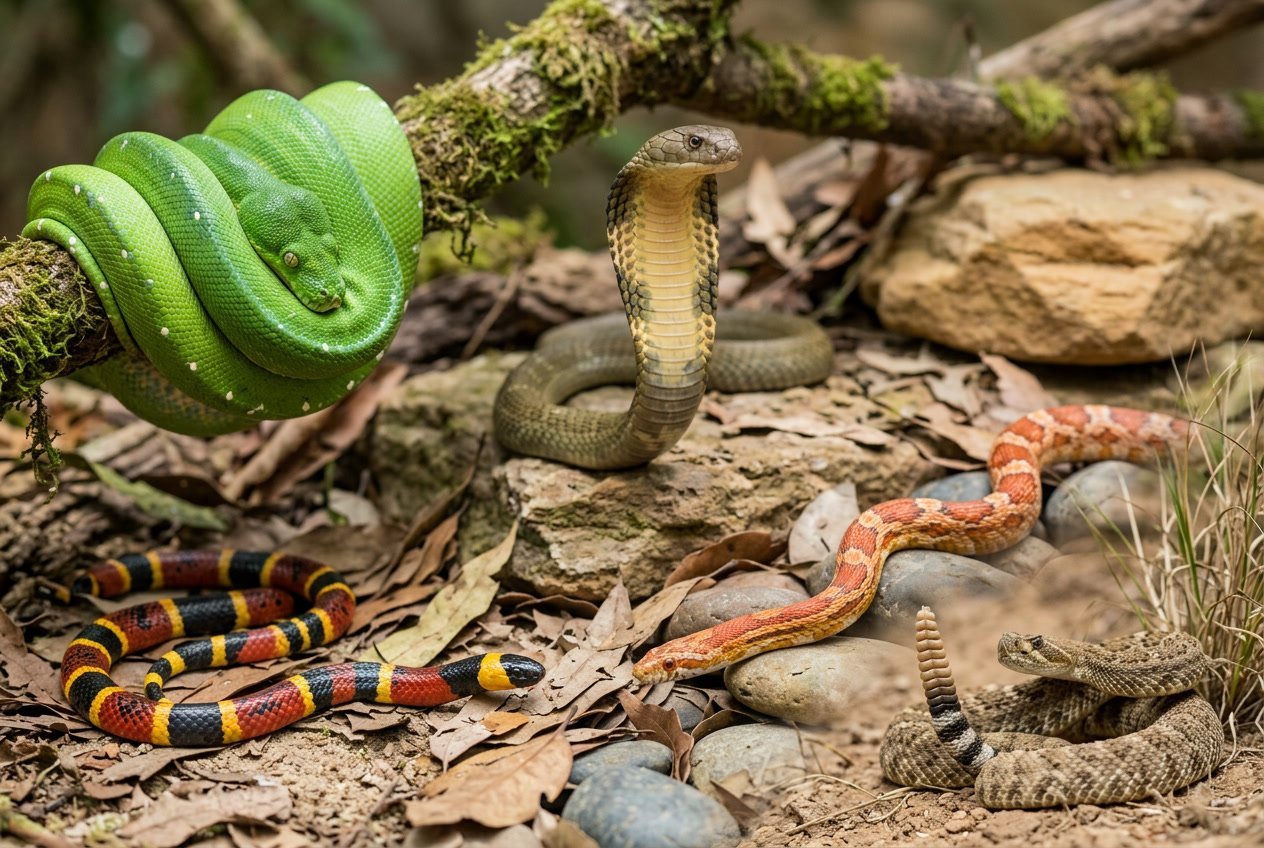
Snakes are reptiles in the group Reptilia and the suborder Serpentes. More than 3,000 snake species are recognized worldwide, and in everyday use you will usually see them grouped as harmless colubrids, constrictors such as boas and pythons, and venomous snakes such as vipers and elapids.
If you learn a few core traits, family, head structure, scales, habitat, and behavior, you can sort most types of snakes much more accurately and much more safely.
You will also notice a practical pattern quickly. The snakes people ask about most often usually fall into three categories: pet snakes, venomous snakes, and common yard or water-edge snakes.
Key Takeaways
- You can identify many snakes by combining family traits, habitat, and body structure.
- Most snakes you see in yards are harmless and useful pest controllers.
- Beginner pet owners usually do best with calm, widely kept nonvenomous species.
How Snakes Are Classified

Snake classification works best when you start broad and narrow down. In practice, you will usually identify a snake first by family, then by visible traits such as scales, body build, head shape, and whether it has specialized fangs.
Major Snake Families at a Glance
The largest and most familiar snake families include these groups:
| Family | Common examples | Typical traits |
|---|---|---|
| Colubridae | garter snakes, rat snakes, king snakes | largest family, many harmless colubrids |
| Viperidae | vipers, pit viper species, rattlesnakes | hinged fangs, venom delivery |
| Elapidae | cobras, kraits, mambas, coral snakes | fixed front fangs, potent venom |
| Pythonidae | ball python, reticulated python | constricting pythons, egg-layers |
| Boidae | boa constrictor, many boas, anacondas | constrictors, many live-bearing species |
| Typhlopidae | blind and threadlike burrowers | small, fossorial snakes |
| Leptotyphlopidae | slender thread snake relatives | tiny, ant- and termite-eaters |
| Atractaspididae | burrowing venomous snakes | unusual fang mechanics |
| Loxocemidae | Mexican burrowing python | small family, primitive features |
| Uropeltidae | shieldtail snakes | burrowing snakes of South Asia |
| Xenopeltidae | sunbeam snakes | iridescent scales, burrowing lifestyle |
A colubrid or one of the colubrids is often what you encounter in North American yards. That family contains a huge range of snake species, from slender tree-climbers to sturdy ground hunters.
What Makes a Snake Different From Other Reptiles
Snakes are reptiles, yet they differ from many other reptilia in clear ways. They have no external limbs, no movable eyelids, and no external ear openings.
You can also spot the forked tongue, which helps collect scent particles from the air and ground. That information is processed by the Jacobson’s organ, which is one reason snakes can trail prey with surprising accuracy.
Key Traits Used in Identification
When I sort unknown snakes in the field, I never rely on one feature alone. A striped pattern can show up in several unrelated groups, so you get a better result by stacking traits together.
Look for these clues:
- Body build, slender, thick, short-tailed, or very long
- Scale texture, smooth or keeled
- Head shape, narrow or broad
- Pupil shape, round or vertical, though this is not always visible safely
- Fangs, fixed front fangs, hinged fangs, or no obvious venom-delivery system
- Behavior, climbing, burrowing, swimming, coiling, tail vibration
- Habitat, grassland, forest edge, marsh, desert, or under leaf litter
Best Pet Snakes for Beginners
The best beginner snakes are predictable feeders, tolerate routine handling, and fit a manageable snake habitat in a home setting. You also want a species with stable captive care standards, since that makes temperature, humidity, and enclosure setup easier to get right.
Ball Pythons
The ball python is one of the most common first snakes for a reason. It is a member of Pythonidae, stays manageable in size, and usually responds to stress by curling into a ball rather than striking.
In hands-on reptile care, this species tends to reward consistency. If your enclosure has secure hides, steady heat, and proper humidity, ball pythons usually settle well and make calm long-term pets.
Corn Snakes and Rat Snakes
Corn snakes and many rat snakes are colubrids in the family Colubridae. They are active, alert, and usually excellent feeders, which makes them forgiving for new keepers.
They also tend to use vertical space well, so a properly sized snake habitat with climbing branches and secure hiding spots works better than an empty box. If you want a visible pet that is often out exploring, these are strong choices.
King Snakes
King snakes are hardy colubrids with strong feeding responses and good adaptability. They are often recommended for beginners because they tolerate a range of captive conditions better than some delicate species.
That said, they can be enthusiastic eaters. In practice, careful feeding routines matter, because king snakes may latch onto movement quickly and should be handled with calm, consistent technique.
Venomous Groups and How They Hunt
Venomous snakes use different delivery systems and toxin types depending on the family. The two major venomous groups most people should know are vipers and elapids, and they hunt in very different ways.
Vipers, Pit Vipers, and Rattlesnakes
Vipers in the family Viperidae usually have long, hinged fangs that fold back when not in use. Many are ambush predators with stout bodies and rapid strike speed.
Pit vipers are a major subgroup recognized by heat-sensing pits between the eye and nostril. In the United States, this includes rattlesnakes, copperheads, and cottonmouth relatives in Agkistrodon, including the moccasin or water moccasin.
Well-known examples include the sidewinder, prairie rattlesnake, and Crotalus atrox, the western diamondback. Rattlesnakes use a warning rattle when threatened, though you should never depend on hearing one before noticing the snake.
Cobras, Kraits, and Mambas
Elapids in the family Elapidae include cobras, krait species, mamba species in Dendroaspis, and the inland taipan, Oxyuranus microlepidotus. These snakes have fixed front fangs rather than the folding fang setup seen in vipers.
Many elapids rely on fast strikes and highly effective venom. Cobras may display hoods, kraits are often secretive and nocturnal, and mambas are known for speed and repeated striking ability.
Venom, Fangs, and Neurotoxins
Snake venom is not all the same. Some venom damages tissue and blood components, while some acts strongly on the nervous system through neurotoxins.
The fang system matters too. Vipers inject through long rotating fangs, while elapids use shorter fixed fangs. If you are identifying from a distance, the safest rule is simple: do not approach, do not handle, and use location plus body build for a cautious assessment.
Constrictors and the Largest Species
Constrictors kill prey by gripping and coiling rather than using venom. The best-known constrictors belong to Pythonidae and Boidae, and these groups include several of the largest snakes on Earth.
Pythons Around the World
Pythons are Old World snakes found in Africa, Asia, and Australia. Familiar examples include the ball python and the reticulated python, Python reticulatus, often listed today as Malayopython reticulatus in some taxonomies.
If you have ever seen both species in person, the size contrast is striking. A ball python is compact and manageable, while a reticulated python is a giant animal that requires expert-level space, equipment, and safety planning.
Boas and Anacondas
Boas belong to Boidae and include the boa constrictor and anacondas. The green anaconda, Eunectes murinus, is especially famous for sheer mass.
Anacondas are strongly tied to water. Their build is heavy, muscular, and ideal for ambush hunting in swamps, marshes, and slow-moving rivers.
Record Holders in Size
The title of largest snake depends on what you measure.
- Longest snake: reticulated python
- Heaviest snake: green anaconda
- Most common giant pet constrictor: boa constrictor or large python species, depending on the keeper community
For practical use, any giant constrictor is not a beginner pet. AZ Animals often covers these species in a way that helps you compare size, range, and behavior without treating them as interchangeable.
Common Backyard and Garden Snakes
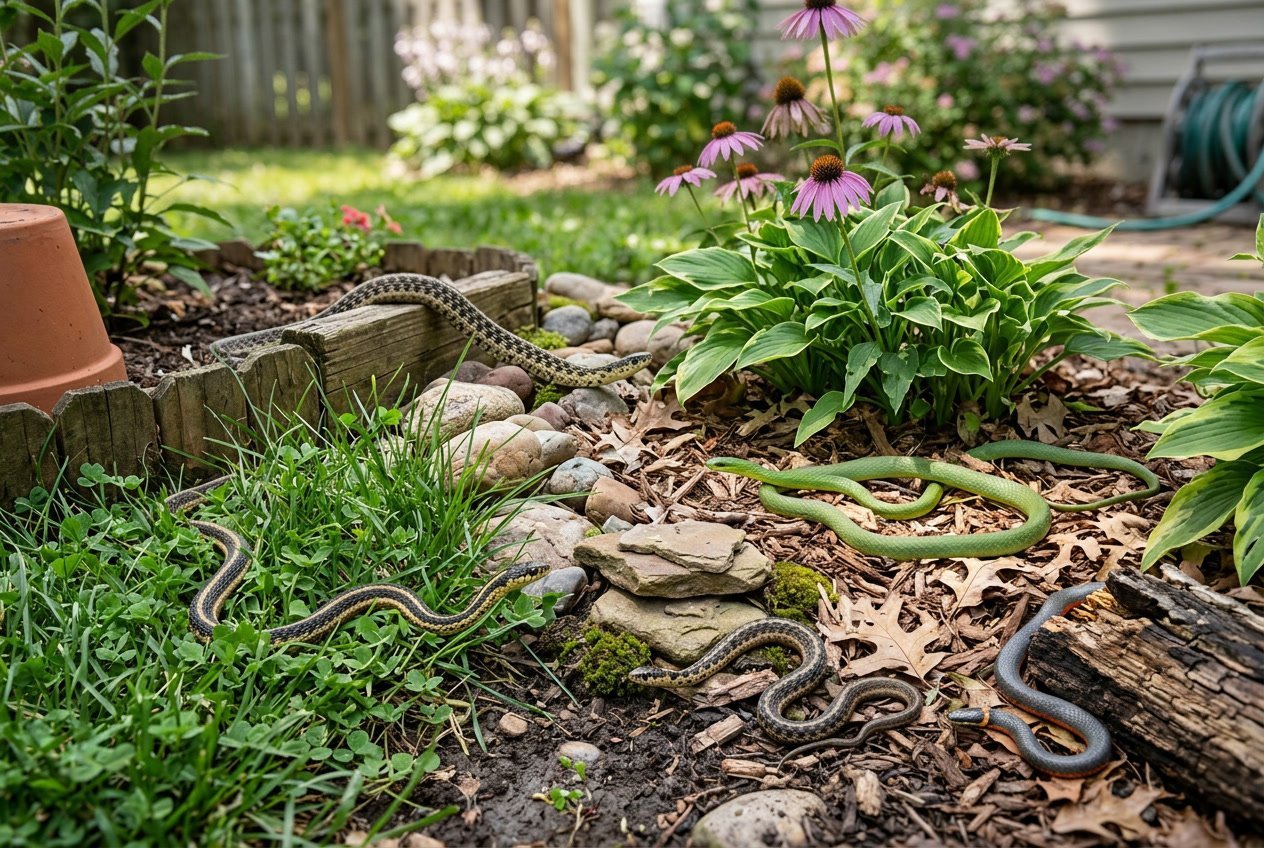
Most snakes you see around homes are harmless and are there because your yard provides shelter, moisture, and prey. Lawns, mulch beds, rock borders, compost piles, and ponds can all create useful snake habitat.
Garter Snakes
Garter snakes are among the most common backyard snakes in North America. They are active, adaptable, and often show stripes running down the body.
You will often find them near gardens, brush piles, and moist areas where they can hunt insects, worms, amphibians, and small vertebrates. They are colubrids and are not considered dangerous to people.
Green Snakes and Other Harmless Colubrids
The rough green snake and smooth green snake, often placed in Opheodrys, are slender, bright green, and easy to miss in shrubs or tall grass. They are classic harmless colubrid examples.
Other nonvenomous colubrids you may see include small brown snakes, rat snakes, and juvenile racers. A useful field tip is that harmless yard snakes often freeze or flee quickly rather than stand their ground.
Water Snakes vs. Water Moccasins
This is one of the most common identification mistakes. Water snake species in Nerodia are nonvenomous, while the water moccasin, also called cottonmouth, belongs to Agkistrodon and is venomous.
If you are at pond edge or creek side, do not rely on color alone. Water snakes often look bulky and patterned, which leads to frequent false alarms. If you cannot confirm safely from a distance, give any waterside snake space and avoid trying to move it.
Range, Habitat, and Size Extremes
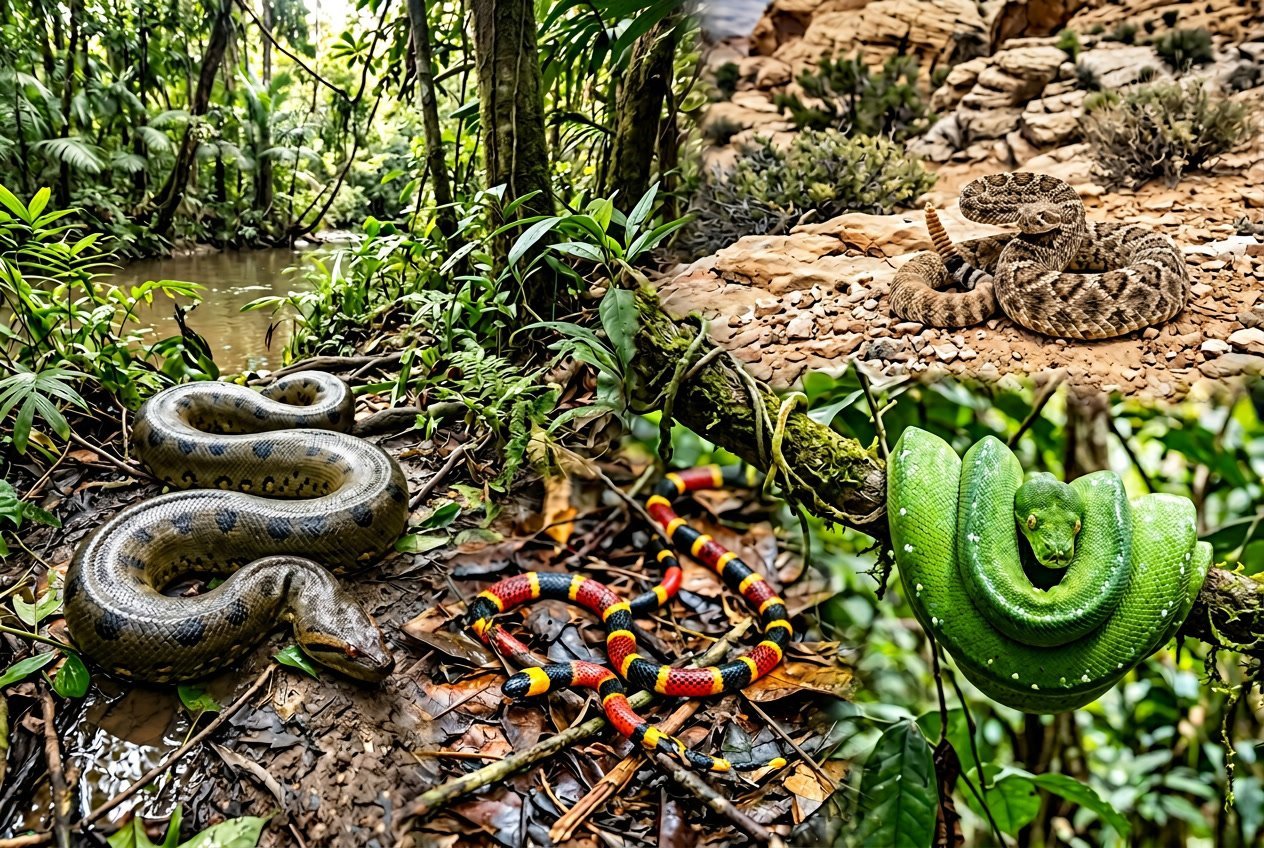
Snakes live on every continent except Antarctica, and their behavior changes with climate, cover, and prey. If you know where a snake is found, you can often narrow the possibilities much faster than by pattern alone.
Where Snakes Live
Snake habitat includes deserts, wetlands, forests, grasslands, farms, suburban lots, and underground burrows. Some species are strongly tied to water, while others spend most of their lives under soil, leaf litter, or logs.
A house snake in Africa, for example, is a common, nonvenomous snake adapted to human-altered landscapes. In the United States, you are more likely to compare local garter snakes, rat snakes, and water snakes by region.
From Thread Snakes to Giant Species
At the tiny end, thread snakes in Typhlopidae and Leptotyphlopidae include some of the smallest snake species in the world. The Barbados threadsnake is widely cited as the smallest snake.
At the opposite extreme, the largest snake contenders include the reticulated python and green anaconda. One is famous for length, the other for mass.
How Habitat Shapes Behavior
Habitat often explains behavior better than color does. A desert pit viper may bury itself in sand, an arboreal green snake may remain thin and camouflage-rich, and an aquatic species may hold its head higher while swimming.
When you identify snakes outdoors, ask three questions first: Where is it, what is it doing, and what shape is it? That simple method is often more useful than trying to memorize dozens of patterns.
Frequently Asked Questions
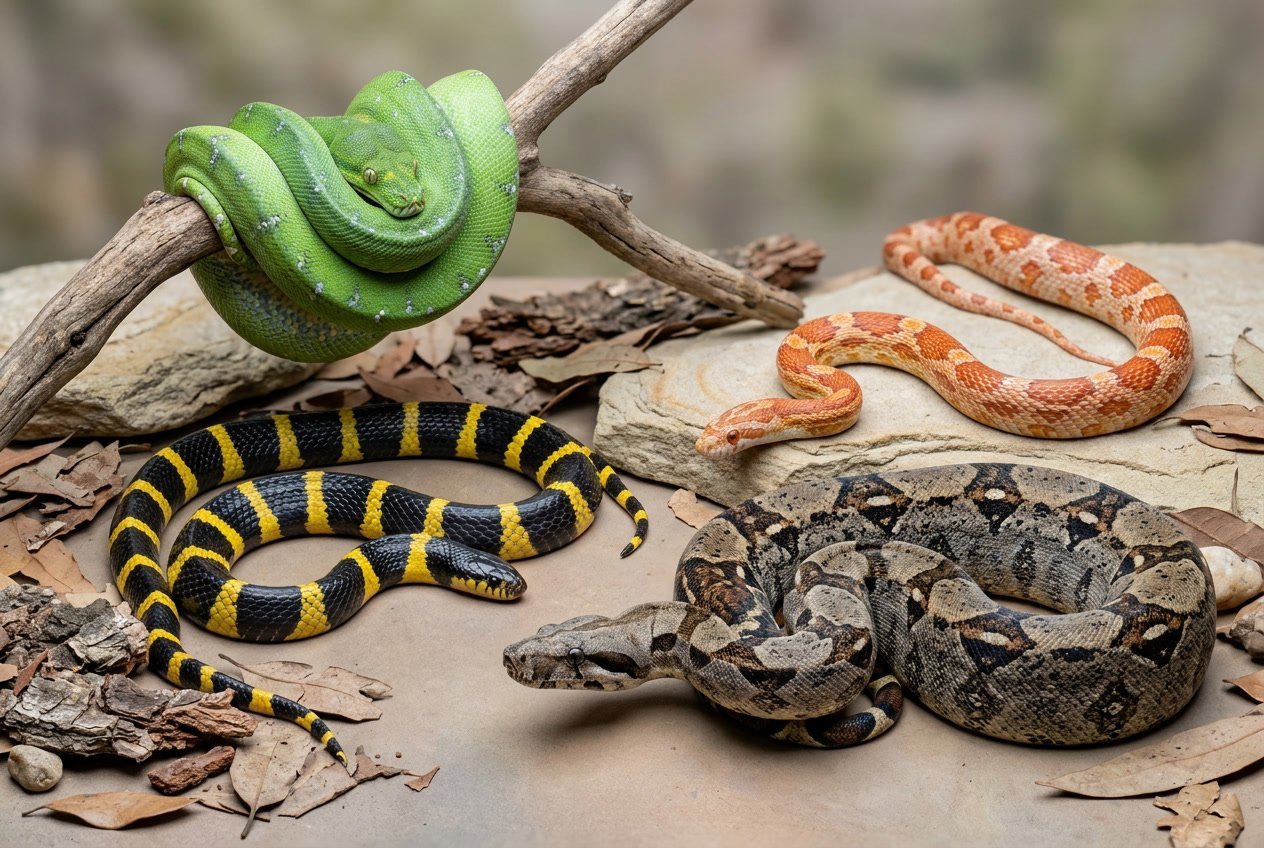
What are some common snake families and how do they differ?
The most commonly discussed snake families are Colubridae, Viperidae, Elapidae, Pythonidae, and Boidae. Colubrids include many harmless species, vipers and elapids include many venomous snakes, and pythons and boas are best known as constrictors.
How can I identify a snake by its color patterns, head shape, and scales?
Use pattern as only one clue, not the whole answer. You will get a better identification by combining color with scale texture, body thickness, head proportions, behavior, and the habitat where you found the snake.
Which snakes are venomous, and how can they be recognized safely from a distance?
In the United States, the main venomous groups are rattlesnakes, copperheads, cottonmouths, and coral snakes. From a safe distance, focus on location, body build, and behavior, and never approach close enough to inspect pupils or head details.
What are some widely distributed snake species found across different continents?
Widely distributed groups include pythons in Africa, Asia, and Australia, colubrids across much of the world, and vipers across Europe, Asia, Africa, and the Americas. Human-adapted snakes such as some house snake and rat snake relatives also occur across broad regional ranges.
Which snake species are considered good choices for beginner pet owners?
Ball pythons, corn snakes, many rat snakes, and king snakes are among the most common beginner choices. They are popular because they are generally manageable in size, widely bred in captivity, and supported by well-established care information.
What are ten well-known snake species and where are they typically found?
A useful starter list includes ball python in West and Central Africa, reticulated python in Southeast Asia, boa constrictor in the Americas, green anaconda in South America, western diamondback rattlesnake in the Southwestern United States and Mexico, prairie rattlesnake in central North America, sidewinder in desert regions of the American Southwest, king cobra in South and Southeast Asia, black mamba in sub-Saharan Africa, and garter snakes across much of North America. If you want to identify one of these in the wild, range is often your fastest first filter.