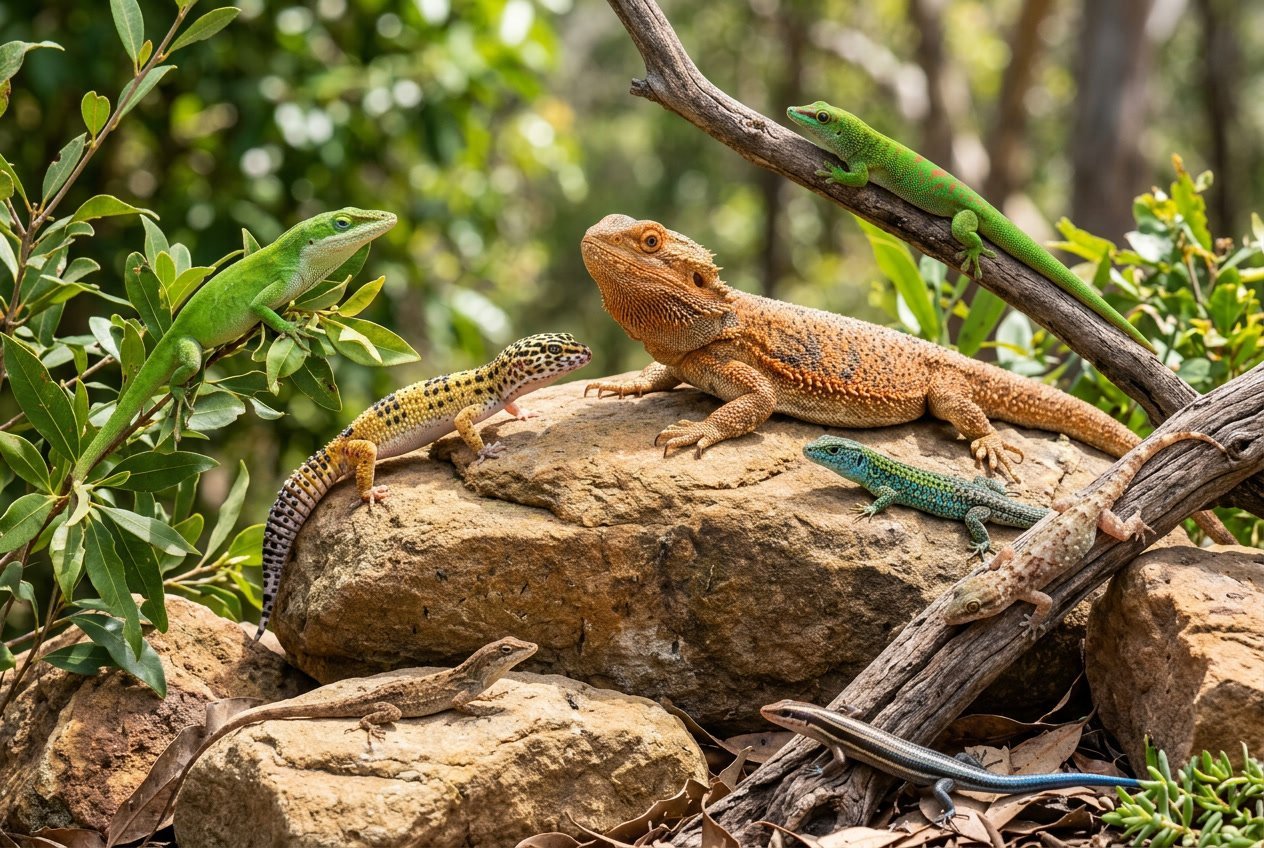
Types of lizards include geckos, iguanas, skinks, chameleons, monitors, tegus, and many other reptile groups within Squamata. If you want to identify a lizard, choose a pet, or sort out which species live near you, the easiest method is to look at body shape, scales, toes, habitat, and behavior together.
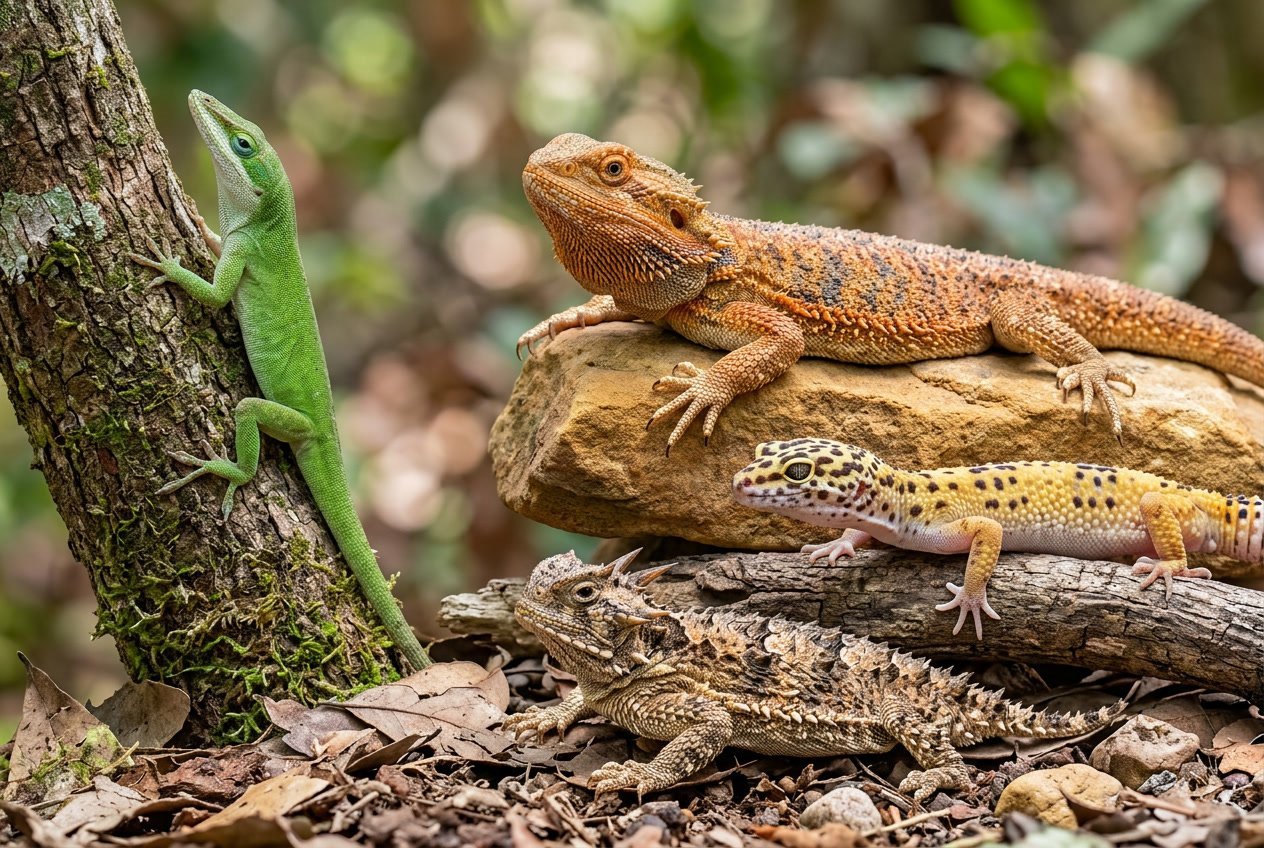
Lizards are one of the most varied reptile groups on Earth, with thousands of lizard species ranging from tiny dwarf geckos to the Komodo dragon. You can find common types of lizards in deserts, forests, suburbs, and tropical coasts, and each group has its own clear set of traits.
If you learn the major body plans and a few key examples, you can identify many types of lizards quickly and avoid mixing them up with snakes, salamanders, or each other.
A practical guide helps because people usually search for lizards in three ways: by classification, by pet care interest, or by what they see in the yard. This article covers all three, so you can move from broad biology to real-world examples without getting lost in technical detail.
Key Takeaways
- You can sort most lizards by toe shape, scales, body form, and habitat.
- Pet species differ a lot in care level, size, and temperament.
- North American lizards include native desert species and many introduced tropical ones.
What Makes a Lizard a Lizard
Lizards are reptiles in the order Squamata, the same broad group that includes snakes. Most lizards share a recognizable mix of external ears, movable eyelids, limbs, and dry scales, though there are important exceptions.
Key Traits That Separate Lizards From Other Reptiles
Many lizards have four legs, a long tail, and visible ear openings. A lot of species also have movable eyelids, which is one of the easiest ways to separate many lizards from snakes in the field.
You will also notice strong thermoregulation behavior. Lizards bask, retreat to shade, flatten their bodies against warm surfaces, or shift posture to control body temperature.
Other traits vary widely. Some are egg-laying, while others are viviparous and give birth to live young. Many rely on cryptic coloration, meaning body colors and patterns help them blend into bark, sand, leaves, or rock.
How Lizards Fit Into Squamata
Within Squamata, lizards are a broad reptile grouping rather than one simple body type. Geckos, skinks, iguanas, chameleons, and monitors all count as lizards even though they look very different.
If you read reptile classification guides on AZ Animals, you will notice that lizard groups are often divided by families and genera. That matters because related groups often share features like toe pads, tongue structure, body armor, or feeding style.
Why Some Lizards Have Lost Their Legs
Not every lizard looks like the classic four-legged form. Legless lizards, including glass lizards in the genus Ophisaurus, have long snake-like bodies and reduced or absent limbs.
A legless lizard still differs from a snake in useful ways. Glass lizards keep movable eyelids, usually have visible ear openings, and often show a body shape with a long tail that can break off cleanly. After seeing one up close, the head and blinking eyes usually give it away.
Major Lizard Groups to Know
If you want a useful mental map of types of lizards, start with the major groups people most often encounter in books, zoos, pet stores, and field guides. These groups differ in body shape, climbing ability, diet, and where you are likely to see them.
Geckos
Geckos are usually small to medium-sized, with large eyes and specialized feet. Many species have adhesive toe pads that let them climb walls, glass, and ceilings with ease.
Not every gecko has that classic sticky-foot setup. The leopard gecko is a good example of a gecko that lacks the usual wall-climbing toe pads and has movable eyelids.
Iguanas and Anoles
Iguanas are typically larger-bodied, often herbivorous, and common in tropical habitats. The iguana body plan usually includes a long tail, strong limbs, and a row of dorsal spines.
Anoles, in the genus Anolis or Anolis relatives depending on classification use, are much smaller and more delicate. An anole often shows quick movements, tree-perching behavior, and a colorful throat fan called a dewlap.
Chameleons
Chameleons belong to Chamaeleonidae and are easy to recognize by their grasping feet, turret-like eyes, and projectile tongues. Color change is real, though it is used for signaling and thermoregulation as much as camouflage.
Skinks and Other Ground-Dwelling Lizards
Skinks usually have smooth, shiny scales and a more streamlined body than iguanas or agamids. Some skink species have short legs, and a few lineages trend toward reduced limbs.
Other common ground-focused groups include agamids such as Agama, night lizards, wall lizards, and plated lizards. These groups vary, though many are active baskers that rely on speed, camouflage, or rocky cover.
Monitors, Tegus, and Beaded Lizards
Monitor lizards, genus Varanus, are active, intelligent predators with long necks, strong claws, and forked tongues. A monitor lizard often has a very alert posture that stands out right away.
Tegus belong to Teiidae and are robust South American lizards with strong jaws and high activity levels. Beaded lizards are heavier-bodied, slower-moving, and famous for their venom system and rough bead-like scales.
Popular Pet Lizards and Beginner-Friendly Choices
Some pet lizards are forgiving enough for a first reptile setup, while others need precise humidity, UVB lighting, larger enclosures, or more specialized diets. The best beginner choice is usually calm, hardy, widely captive-bred, and easy to feed consistently.
Bearded Dragons
The bearded dragon is often the first name people hear for good reason. It is usually manageable, visible during the day, and responsive to routine handling when kept correctly.
From experience, this species rewards good setup more than people expect. Strong UVB, proper basking temperatures, and a steady mix of insects and greens make a clear difference in appetite and behavior.
Leopard Geckos and Crested Geckos
The leopard gecko, Eublepharis macularius, is one of the easiest pet lizards to recommend. It stays moderate in size, has movable eyelids, and does well with straightforward heating and hiding spots.
The crested gecko is another beginner-friendly option, especially if you prefer an arboreal species. The tokay gecko, Gekko gecko, looks striking, though it is far less beginner-friendly because it is often defensive and more demanding to handle.
Blue-Tongued Skinks
The blue-tongued skink, Tiliqua scincoides, is sturdy, personable, and easy to recognize. It tends to do best with floor space rather than climbing height and usually accepts a varied omnivorous diet.
This is a species many keepers like because its body language is readable. You can often tell quickly whether it feels secure, curious, or stressed.
Veiled Chameleons and Jackson’s Chameleons
The veiled chameleon and Jackson’s chameleon, Trioceros jacksonii, are popular because they look distinctive. They are not as simple as beginner lists sometimes suggest.
Chameleons need careful hydration, airflow, climbing structure, and correct lighting. If you want a display animal more than a handleable pet, they can be a better fit.
Uromastyx and Other Advanced Picks
Uromastyx appeals to people who want a dry-climate lizard with a mostly plant-based diet. They can be excellent captives, though they still need intense heat and species-specific care.
The green iguana, Iguana iguana, is often sold small and bright green, which misleads many new owners. It grows large, needs substantial vertical space, and is not a casual starter reptile.
Large, Venomous, and Unusual Species
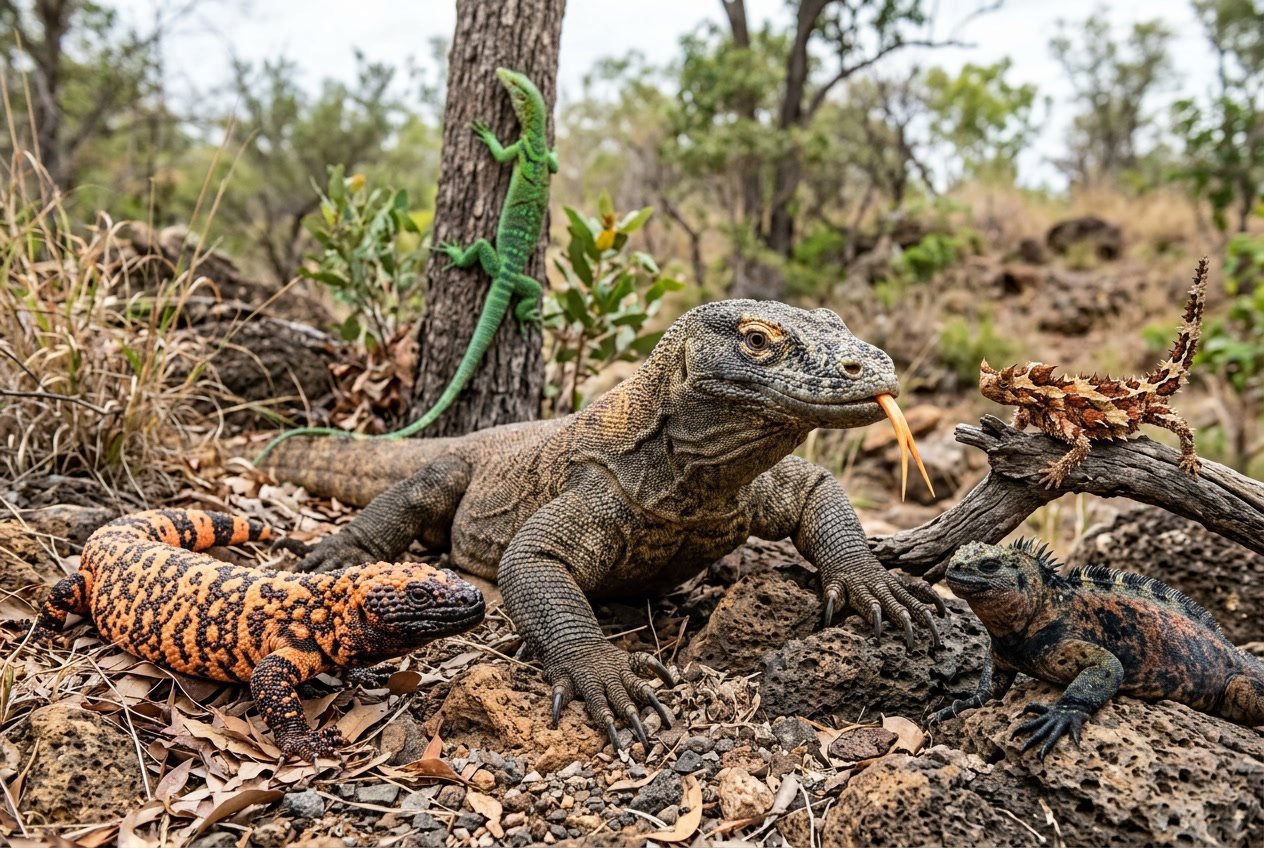
Some lizards stand out because of size, venom, armor, or highly specialized movement. These species are the ones people often remember first, even when they are not the most common.
Komodo Dragon and Other Giant Monitors
The Komodo dragon, Varanus komodoensis, is the largest lizard alive. It belongs to the monitor lizards and combines heavy build, strong limbs, and a powerful bite.
Other large monitors worth knowing include the Nile monitor and savannah monitor. Both are impressive, active reptiles, and both are far more demanding than many people expect in captivity.
Gila Monster and Mexican Beaded Lizard
The Gila monster, Heloderma suspectum, and Mexican beaded lizard, Heloderma horridum, are the best-known venomous lizards in the Americas. Their venom is delivered through grooved teeth during a sustained bite rather than by a fast strike like many snakes.
Gila monsters have thick bodies, short legs, and bead-like scales. If you ever see one in its desert habitat, its slow, deliberate movement is as distinctive as its pattern.
Horned Lizards, Frilled Lizards, and Thorny Devils
Horned lizard species in the genus Phrynosoma, including the Texas horned lizard, are squat, spiny, and highly adapted to dry habitats. Their shape helps with camouflage and defense, and many specialize in eating ants.
The frilled lizard expands a dramatic neck frill when threatened. The thorny devil, Moloch horridus, is another spiny desert specialist, built for defense and water collection in arid environments.
Marine and Semi-Aquatic Specialists
The marine iguana, Amblyrhynchus cristatus, is unique among lizards for feeding in the ocean. It dives to graze algae and has a blunt snout and powerful tail adapted for that role.
Other unusual species include the caiman lizard, the flying dragon that glides between trees, and the armadillo girdled lizard, Ouroborus cataphractus, known for its armored look and defensive curling behavior.
Small and Easy-to-Recognize Backyard Species
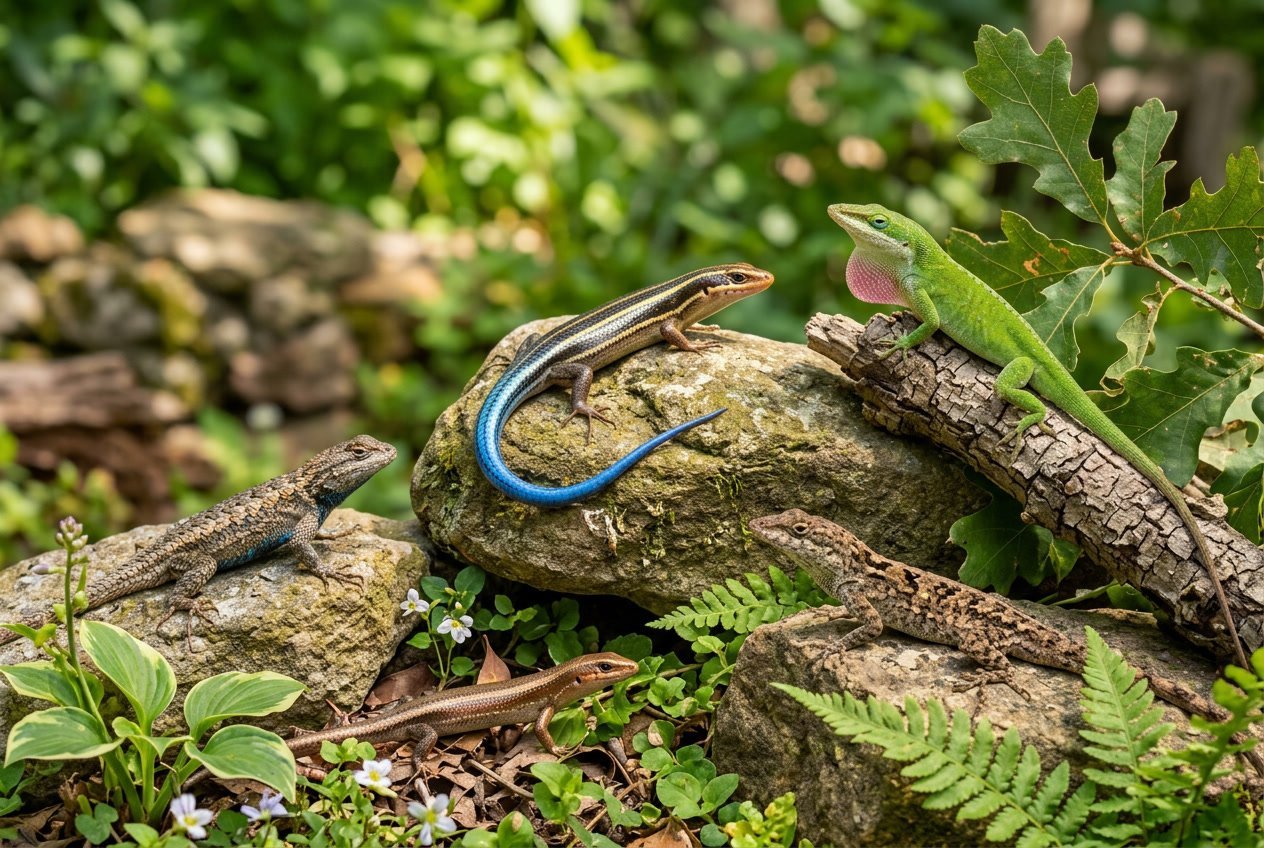
Backyard lizards are often the easiest place to start if you want better field identification skills. You can tell many of them apart by color shifts, perch height, toe structure, and how they move when disturbed.
Green Anoles and Other Anoles
The green anole is one of the most familiar small lizards in the Southeast. It can shift from bright green to brown, and males show a pinkish dewlap during displays.
Anoles are usually slender, alert, and comfortable on shrubs, fences, and trunks. If you watch one for a minute, you will often see head-bobbing or quick bursts of movement between perches.
House Geckos and Dwarf Geckos
A house gecko is commonly seen near lights at night, where insects gather. Its adhesive toe pads, wide eyes, and translucent skin tones make it fairly easy to spot.
Dwarf gecko species are tiny and much easier to miss. Some rank among the smallest lizard species in the world, especially when compared with heavier backyard forms.
Fence Lizards and Collared Lizards
Fence lizards, including the western fence lizard and eastern fence lizard in the genus Sceloporus, are common baskers. They usually sit upright on posts, rocks, or logs and dash for cover when approached.
A collared lizard looks more long-legged and upright, with a stronger head and bold body patterning. In open sunny areas, that posture makes it stand out right away.
Basilisks and Other Standout Forms
Basilisks are famous for running across water, which is why the common basilisk and green basilisk are often called the Jesus Christ lizard. Their long toes and body balance make that possible for short distances.
Among small climbing lizards, adhesive toe pads are one of the quickest clues you can use. If a lizard clings easily to smooth surfaces, gecko-type feet are often part of the answer.
Where Different Species Live in North America
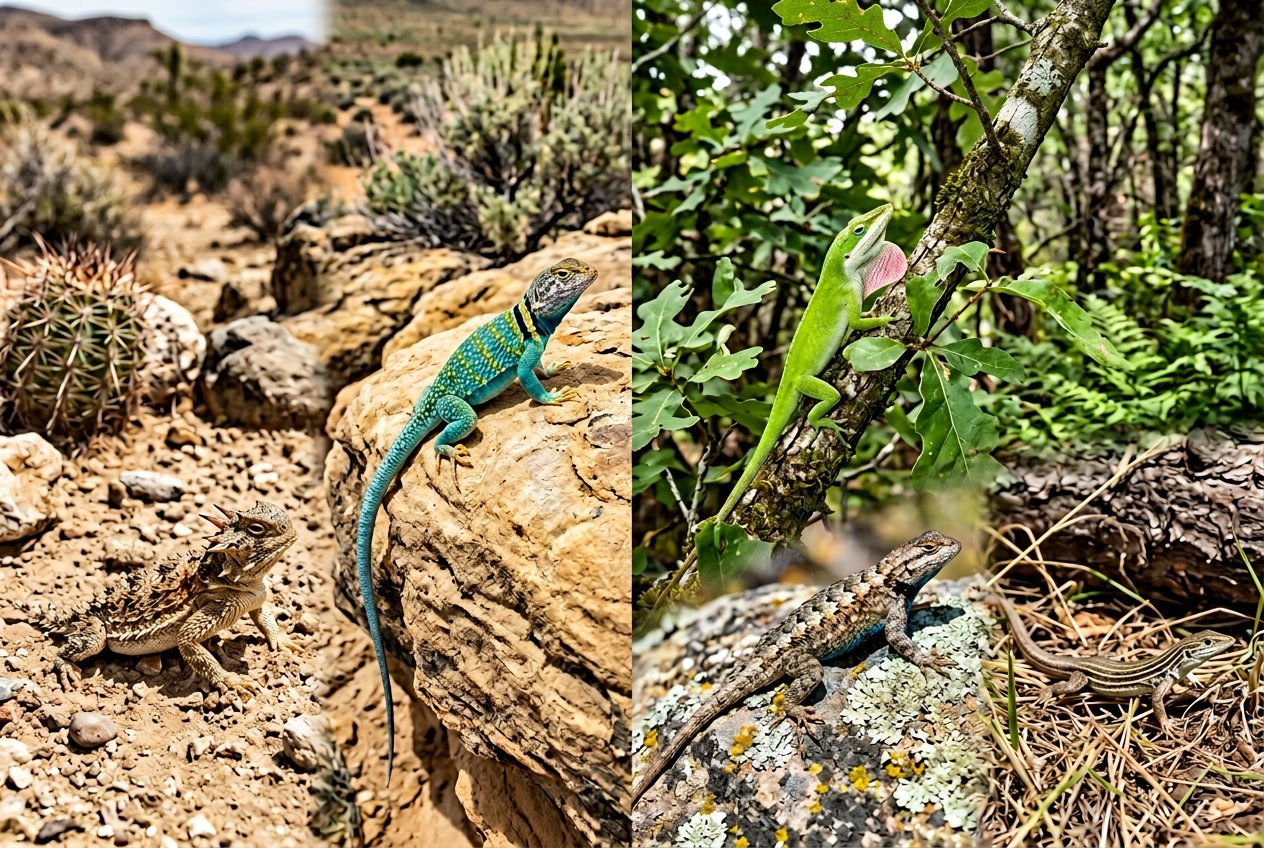
In North America, location gives you a major identification shortcut. Florida has many introduced tropical lizards, Texas mixes woodland and desert forms, and Arizona features some of the continent’s most iconic dry-land species.
Florida Species and Common Introduced Lizards
Florida is full of lizard diversity, including the green anole, house gecko, and established introduced populations of green iguana, Iguana iguana. In many developed areas, the lizards you see on walls and ornamentals may be non-native.
Wall lizards can also appear in parts of the United States outside their original range. In Florida especially, identification often starts with one question: native species or introduced species?
Texas Species and Desert Adaptations
Texas gives you a mix of habitats, so species can vary a lot by region. The Texas horned lizard is the best-known standout, and it is strongly tied to dry ground and ant-rich areas.
You may also come across leopard lizard species and the desert iguana in suitable habitats. In drier landscapes, pale coloration, long limbs, and heat-avoidance behavior are useful adaptation clues.
Arizona Species and Venomous Standouts
Arizona is prime lizard country if you want desert specialists. The Gila monster, Heloderma suspectum, is the state’s most famous venomous lizard, and it shares the region with whiptails, horned lizards, and many rock-dwelling species.
You can also find legless lizard relatives in broader North American discussions, though true desert field sightings usually center on more familiar surface-active species. Western species often show dusty camouflage, quick sprinting, and strong basking behavior tied to rocky ground.
Frequently Asked Questions
What are the most common lizards kept as pets for beginners?
The most common beginner-friendly pet lizards are the bearded dragon, leopard gecko, and crested gecko. They are widely available, generally manageable in size, and easier to keep than species like green iguanas, tokay geckos, or many monitors.
How can you identify a lizard species by its physical features?
Start with body shape, scale texture, toe type, tail length, and head shape. In practice, I also look at where the lizard is sitting, whether it climbs glass or bark, whether it has a dewlap, and whether the eyes have movable eyelids.
What are the main groups of lizards, and how do they differ?
The main groups people usually learn first are geckos, iguanas, anoles, chameleons, skinks, monitors, tegus, and venomous beaded lizards. They differ in size, foot structure, diet, habitat use, and defensive traits.
Which lizards have spines or spikes, and what is their purpose?
Bearded dragons, iguanas, horned lizards, thorny devils, and many agamids have spines or spikes. These structures help with defense, camouflage, display, and in some species breaking up the body outline against rough terrain.
What are the key differences between skinks and geckos?
Skinks usually have smooth, shiny scales and a more streamlined body for ground movement or burrowing. Geckos often have broader toe pads, large eyes, more climbing ability, and in many species a more obvious nocturnal lifestyle.
Which lizards are commonly called “dragons,” and where are they found?
The best-known examples are the Komodo dragon in Indonesia, the bearded dragon in Australia, the flying dragon in Southeast Asia, and the water-running basilisk that gets nicknamed a dragon in casual use. The term is common in everyday language and does not refer to one formal scientific lizard group.